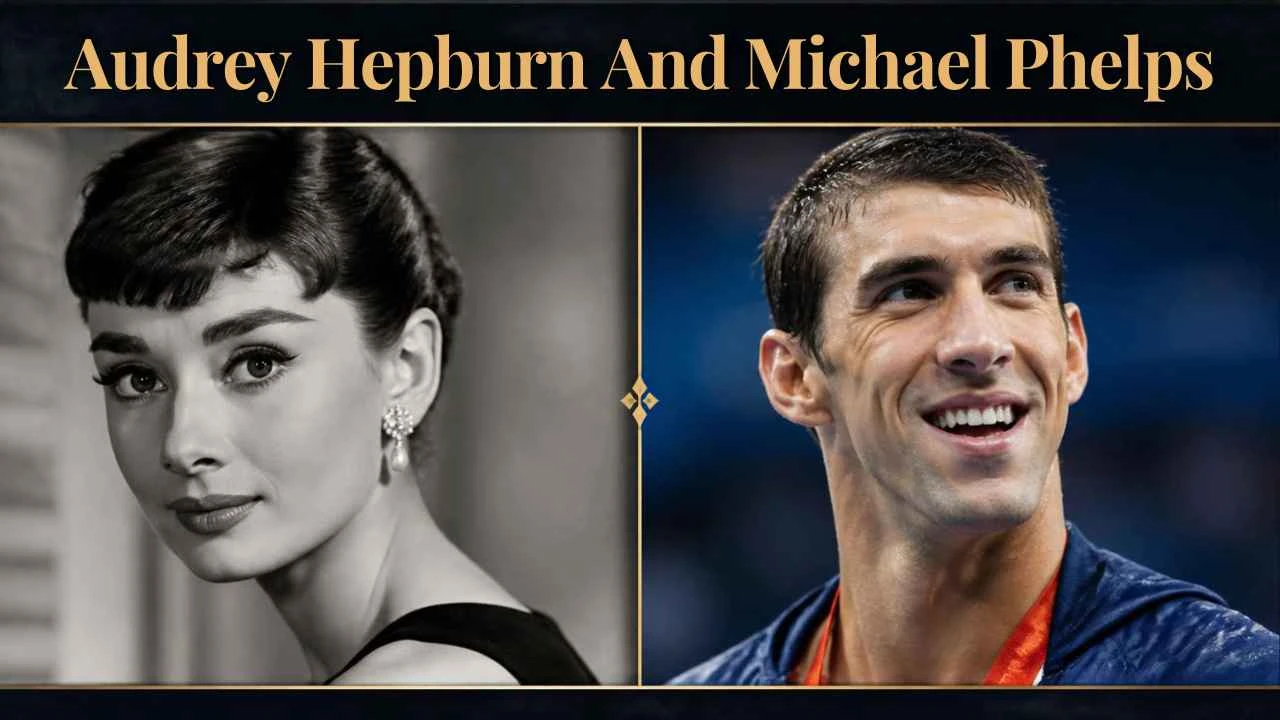
Audrey Hepburn and Michael Phelps belong to different generations, different professions, and completely different worlds of achievement. Hepburn became one of the defining faces of classic Hollywood, while Phelps built his reputation in the swimming pool and became one of the most decorated athletes in Olympic history.
At first glance, Audrey Hepburn and Michael Phelps may seem like an unusual pair to discuss together. One became famous through cinema, fashion, and humanitarian work. The other reached global recognition through competitive swimming, Olympic records, and later advocacy for water safety and mental wellness.
Yet their stories share an important thread. Both turned exceptional professional success into a much broader public legacy.
Hepburn’s career moved from acting and fashion toward international humanitarian advocacy with UNICEF. Phelps moved from elite swimming into youth development, water safety, healthy living, and mental health advocacy. Their paths were never identical, but both show how a public platform can extend far beyond the profession that created it.
| Category | Audrey Hepburn | Michael Phelps |
| Full name | Audrey Kathleen Hepburn-Ruston | Michael Fred Phelps II |
| Main profession | Actress and humanitarian | Competitive swimmer |
| Birth year | 1929 | 1985 |
| Major field | Film and fashion | Olympic swimming |
| Signature achievement | Academy Award for Roman Holiday | 28 Olympic medals |
| Olympic participation | None | Five Olympic Games |
| Gold medals | N/A | 23 |
| Humanitarian focus | Children’s welfare and UNICEF | Water safety, youth development, mental wellness |
| Major organization | UNICEF | Michael Phelps Foundation |
| Cultural influence | Cinema, fashion, humanitarian advocacy | Sport, Olympic culture, mental health advocacy |
The comparison becomes more meaningful when you look beyond fame itself. Their achievements, struggles, public responsibilities, and later work reveal two very different forms of global influence.
Who Were Audrey Hepburn And Michael Phelps?
Audrey Hepburn At A Glance
Audrey Hepburn was born on May 4, 1929, in Brussels, Belgium. She developed an early interest in ballet before moving toward acting. Her breakthrough came with Roman Holiday, in which she played Princess Ann opposite Gregory Peck.
The role changed her career almost overnight. Hepburn won the Academy Award for Best Actress for the film at the 26th Academy Awards in 1954.
She subsequently appeared in films such as Sabrina, Funny Face, War and Peace, Breakfast at Tiffany’s, My Fair Lady, and Wait Until Dark. The Academy’s records show five Best Actress nominations during her career, along with the Jean Hersholt Humanitarian Award.
Her influence eventually moved well beyond Hollywood. Hepburn became a UNICEF Goodwill Ambassador in 1988 and devoted much of the final years of her life to international children’s causes. UNICEF records that she traveled to several countries to see humanitarian projects firsthand and used interviews, speeches, and public appearances to draw attention to children’s needs.
Michael Phelps At A Glance
Michael Phelps was born on June 30, 1985, in Baltimore, Maryland. He began swimming at a young age and developed into an elite competitor under coach Bob Bowman.
His Olympic career stretched across five Games: Sydney 2000, Athens 2004, Beijing 2008, London 2012, and Rio 2016.
The numbers are extraordinary:
- 28 Olympic medals
- 23 Olympic gold medals
- 3 Olympic silver medals
- 2 Olympic bronze medals
- Five Olympic appearances
- Numerous world records during his competitive career
The International Olympic Committee has identified Phelps as a five-time Olympian and the most decorated Olympian in its historical records.
After swimming, Phelps increasingly used his public platform for causes involving athlete mental health, youth development, and water safety. His foundation now describes its mission around water safety, mental wellness, healthy living, confidence, and resilience.
Why Are Audrey Hepburn And Michael Phelps Compared?
There isn’t a documented professional partnership between the two. They also belonged to entirely different eras.
The connection comes from their status as global cultural icons whose influence eventually extended beyond their original careers.
Hepburn’s name became associated with classic cinema, fashion, elegance, and humanitarian work. Phelps’s name became associated with Olympic excellence, swimming, discipline, and later mental wellness and water-safety advocacy.
In other words, their careers provide two different examples of how extraordinary professional achievement can become a lasting public legacy.
Audrey Hepburn’s Early Life And Background

Childhood In Belgium And The Netherlands
Hepburn’s childhood began in Belgium and later included years in the Netherlands. Her mother was Dutch, while her father was English.
Her childhood coincided with one of Europe’s darkest periods. During World War II, Hepburn lived through occupation and severe hardship in the Netherlands.
Those experiences later became an important part of her humanitarian story. UNICEF notes that Hepburn personally experienced food and medical relief after World War II. That history helped shape the emotional connection she expressed toward UNICEF’s work with children.
Her early life therefore wasn’t simply a glamorous prelude to Hollywood. Before becoming an international celebrity, she had already experienced hunger, insecurity, and wartime deprivation.
How World War II Shaped Her Early Years
The war affected Hepburn’s health, education, family circumstances, and daily life.
She later carried those memories into her humanitarian work. When she visited children affected by hunger, poverty, disease, and conflict decades later, the subject wasn’t entirely abstract to her.
That personal connection gave additional weight to her advocacy.
UNICEF specifically records her explanation that she understood what the organization meant to children because she had received food and medical assistance after the war herself.
Ballet Training And Early Performing Career
Hepburn originally dreamed of becoming a ballet dancer. She trained seriously and eventually continued her studies in London.
However, the physical demands and circumstances surrounding her early development redirected her toward acting.
That change proved pivotal. What began as an interest in performance eventually became an internationally recognized acting career.
Her ballet training nevertheless remained visible in the qualities that became part of her screen persona: controlled movement, posture, precision, and an understated physical presence.
Audrey Hepburn’s Acting Career And Rise To Stardom
Breakthrough With Roman Holiday
The Roman Holiday became the turning point.
Hepburn played Princess Ann, a young royal who escapes her formal responsibilities while visiting Rome. Gregory Peck played the reporter who encounters her during her brief adventure.
The film gave Hepburn both critical recognition and a major international audience.
At the 1954 Academy Awards, she won Best Actress for her performance. Roman Holiday itself received multiple nominations and won three Oscars.
That achievement established Hepburn as more than a promising newcomer. She had become a major Hollywood star.
Major Audrey Hepburn Movies
Hepburn’s filmography contains several works that remain deeply embedded in popular culture.
Important titles include:
- Roman Holiday
- Sabrina
- War and Peace
- Funny Face
- Breakfast at Tiffany’s
- My Fair Lady
- The Nun’s Story
- Wait Until Dark
Her Academy Award history also demonstrates the range of her recognition. She received Best Actress nominations for Roman Holiday, Sabrina, The Nun’s Story, Breakfast at Tiffany’s, and Wait Until Dark.
Breakfast at Tiffany’s, in particular, became one of the most enduring cultural references associated with her. The Academy records show the film received five nominations and won two awards, including Original Song for “Moon River.”
Audrey Hepburn’s Acting Style And Screen Persona
Hepburn didn’t rely solely on conventional Hollywood glamour.
Her screen presence often combined elegance with vulnerability, humor, intelligence, and a sense of independence. She could appear sophisticated in one scene and mischievous in the next.
That balance helped her create characters who felt memorable without depending entirely on spectacle.
Her public persona eventually became inseparable from a particular form of understated elegance. However, reducing her career to fashion alone overlooks the depth of her acting work.
Audrey Hepburn’s Fashion And Cultural Influence
The Audrey Hepburn Style
Hepburn became one of the most recognizable fashion figures of the 20th century.
Her style often emphasized clean lines, simple silhouettes, ballet flats, cropped trousers, tailored clothing, and restrained accessories. Her collaborations with designer Hubert de Givenchy became especially influential.
The result was a visual language that remains easy to recognize decades later.
Rather than relying on elaborate styling, the Hepburn image often worked through simplicity. That quality helped turn her into a lasting fashion influence.
Breakfast At Tiffany’s And Pop Culture
Holly Golightly from Breakfast at Tiffany’s became one of Hepburn’s defining screen roles.
The character’s wardrobe, hairstyles, jewelry, and overall visual presentation became widely referenced in fashion and photography.
Even people who haven’t watched the entire movie may recognize imagery associated with Hepburn’s portrayal.
That’s an important distinction between an ordinary celebrity and a true cultural touchstone. A cultural touchstone continues to communicate meaning long after the original work appeared.
Why Audrey Hepburn Remains A Cultural Icon
Hepburn’s influence rests on several overlapping pillars:
- Classic Hollywood cinema
- Fashion
- Photography
- Popular culture
- Humanitarian advocacy
- UNICEF
- Children’s rights
Her image has remained recognizable across generations because different audiences can encounter different parts of her legacy.
Film lovers may know her for Roman Holiday. Fashion audiences may know her for Givenchy and Breakfast at Tiffany’s. Humanitarian organizations remember her for UNICEF.
That combination explains much of her lasting influence.
Audrey Hepburn’s Humanitarian Work With UNICEF
Becoming A UNICEF Goodwill Ambassador
Hepburn became a UNICEF Goodwill Ambassador in 1988.
This wasn’t merely a ceremonial title. UNICEF documents an extensive series of field visits, public appearances, interviews, speeches, and advocacy activities during her time with the organization.
She used her celebrity to attract attention to children affected by serious humanitarian problems.
Humanitarian Missions And International Advocacy
Hepburn traveled extensively on behalf of UNICEF.
Her documented visits included:
- Ethiopia
- Turkey
- Venezuela
- Ecuador
- Guatemala
- Honduras
- El Salvador
- Bangladesh
- Thailand
- Vietnam
- Sudan
- Somalia
- Kenya
During these missions, she saw programs dealing with issues such as famine, vaccination, clean water, education, nutrition, displacement, and child poverty.
Her approach was direct. She went into the field, met communities, spoke with children and aid workers, and then returned to the media spotlight to discuss what she had witnessed.
That made her humanitarian advocacy part of her public identity rather than a footnote to her acting career.
The Difference Between Stardom And Service
Hepburn’s later career demonstrates an important shift.
Hollywood gave her visibility. UNICEF gave that visibility a different purpose.
She could speak to journalists, government officials, donors, and ordinary audiences who might never have paid attention to humanitarian reports otherwise.
UNICEF records that she even testified before the U.S. Congress and participated in major international children’s initiatives.
Her work was recognized by the Academy through the Jean Hersholt Humanitarian Award. The Academy’s records show that the Board of Governors voted to confer the award in January 1993, shortly before her death.
Michael Phelps’s Early Life And Introduction To Swimming
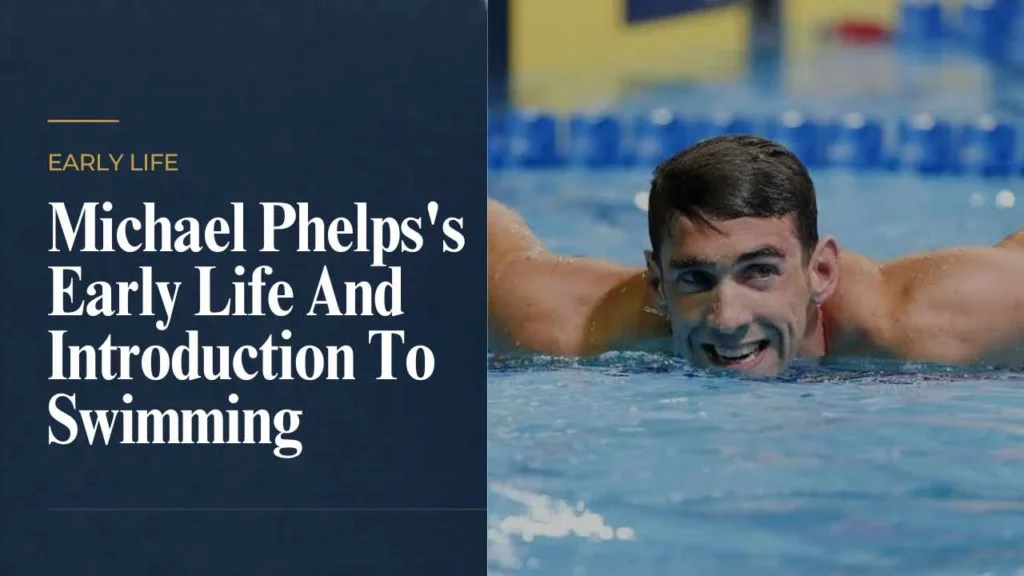
Childhood In Baltimore
Michael Phelps grew up in Baltimore, Maryland, alongside his sisters.
Swimming became an increasingly important part of his childhood. His natural ability was paired with intense training and competitive ambition.
Rather than arriving at Olympic greatness fully formed, Phelps developed through years of repetitive practice, technical refinement, racing experience, and coaching.
That distinction matters. Elite-level discipline rarely looks dramatic during the thousands of ordinary training sessions that create it.
Bob Bowman And Elite Training
Coach Bob Bowman became one of the central figures in Phelps’s swimming career.
Their partnership emphasized technical precision, conditioning, race strategy, goal setting, and an unusually demanding training schedule.
Swimming at the highest level isn’t simply about moving quickly through water. Starts, turns, underwater phases, stroke mechanics, breathing patterns, pacing, recovery, and race strategy can all determine fractions of a second.
Phelps mastered those details across multiple events.
Early Olympic Ambition
Phelps competed at the 2000 Sydney Olympics when he was only 15.
He didn’t win a medal there. However, the experience placed him on the world’s biggest swimming stage at an unusually young age.
Four years later, the scale of his achievements had changed dramatically.
Michael Phelps’s Olympic Career And Achievements
Five Olympic Games
Phelps competed at five consecutive Summer Olympics:
| Olympic Games | Year | Host City |
| Sydney | 2000 | Australia |
| Athens | 2004 | Greece |
| Beijing | 2008 | China |
| London | 2012 | United Kingdom |
| Rio | 2016 | Brazil |
Few swimmers maintain elite performance across such a long Olympic span.
Phelps combined longevity with extraordinary medal production, making his Olympic career one of the clearest examples of competitive excellence in modern sport.
Michael Phelps’s 28 Olympic Medals
Phelps finished his Olympic career with 28 medals.
His breakdown is:
- 23 gold
- 3 silver
- 2 bronze
- 28 total
The IOC has identified him as the most decorated Olympian in its records.
His medal total is remarkable partly because swimming offers numerous medal opportunities across individual and relay events. Phelps competed across multiple disciplines rather than specializing in only one race.
The 2008 Beijing Olympics
The 2008 Beijing Games became the defining chapter of Phelps’s Olympic career.
He won eight gold medals, surpassing the previous record of seven gold medals won by a single athlete at one edition of the Summer Olympics.
The achievement required success across individual and relay events, including races with very different physical and tactical demands.
It wasn’t simply one extraordinary race. It sustained excellence across an entire Olympic program.
Olympic Records And Swimming Achievements
Phelps’s achievements weren’t limited to medals.
The Michael Phelps Foundation states that he set 39 world records during his swimming career.
His competitive résumé covered:
- Butterfly
- Freestyle
- Individual medley
- Relay events
- Olympic records
- World records
- National and international championships
That breadth is one reason his career is frequently discussed when examining iconic achievements in Olympic sport.
Retirement And Return To Competition
Phelps initially retired after the 2012 London Olympics.
He later returned to competition and qualified for the 2016 Rio Olympics.
His final Olympic appearance added another chapter to an already historic career. Rio also gave him the opportunity to compete at a fifth Olympic Games, a distinction shared by only a limited number of athletes.
Michael Phelps Beyond Swimming
Michael Phelps Foundation
Phelps founded the Michael Phelps Foundation in 2008.
The organization initially focused strongly on water safety and healthy living. Its mission has since expanded to include mental wellness, emotional resilience, confidence building, and youth development.
Its signature IM Program combines:
- Water safety
- Learn-to-swim education
- Mental wellness
- Healthy living
- Goal setting
- Confidence building
The foundation currently reports that its programs have reached more than 190,000 participants, operate in all 50 U.S. states, and have an impact in more than 35 countries.
Mental Health Advocacy
Phelps has publicly discussed his own experiences with depression and mental health challenges.
His openness helped bring greater attention to athlete mental health, particularly the reality that elite achievement doesn’t automatically eliminate emotional struggles.
In 2015, he publicly shared personal experiences involving mental health. The Michael Phelps Foundation identifies this disclosure as an important part of his advocacy.
The broader message is straightforward: physical performance and emotional wellbeing aren’t the same thing.
An athlete can stand on an Olympic podium and still need psychological support.
ADHD And His Childhood Experience
Phelps has also spoken publicly about having ADHD as a child.
His experience has often been discussed in connection with swimming, focus, and structured activity. However, it is important not to turn one person’s experience into a universal claim about ADHD.
His story can illustrate how structured environments may become meaningful for some young people. It does not establish that swimming or sport produces the same outcome for everyone.
Audrey Hepburn And Michael Phelps: Career Comparison
The most useful Audrey Hepburn and Michael Phelps comparison isn’t about deciding who achieved more.
Their careers cannot be measured using the same ruler.
An actress’s cultural impact doesn’t translate neatly into Olympic medals. Likewise, an athlete’s world records don’t provide a meaningful numerical comparison with an actor’s performances.
Instead, their careers can be compared across broader dimensions.
| Area | Audrey Hepburn | Michael Phelps |
| Core profession | Acting | Swimming |
| Main achievement system | Film industry | Olympic and international sport |
| Signature accomplishment | Best Actress Oscar for Roman Holiday | 28 Olympic medals |
| Public image | Actress, fashion icon, humanitarian | Olympic champion, athlete, advocate |
| Humanitarian work | UNICEF | Michael Phelps Foundation |
| Youth focus | Children’s welfare | Water safety and youth wellness |
| Advocacy | Children’s rights and humanitarian causes | Mental wellness and water safety |
| Cultural influence | Film and fashion | Olympic sport and athlete advocacy |
| Legacy | Cinema, style, humanitarianism | Sport, youth programs, mental wellness |
Similarities In Their Professional Journeys
Despite their differences, several patterns connect them.
First, both required extraordinary discipline.
Hepburn trained in ballet before building a demanding acting career. Phelps spent years refining swimming technique and conditioning.
Second, both achieved international recognition.
Hepburn became a global film star. Phelps became a global Olympic figure.
Third, both developed identities beyond their primary professions.
Hepburn became strongly associated with humanitarian work. Phelps became increasingly associated with water safety and mental wellness.
Fourth, both faced public scrutiny.
Fame brings attention that ordinary professional success doesn’t.
The audience doesn’t simply see the finished performance. It often wants access to the person’s private life, relationships, struggles, and mistakes.
Major Differences Between Their Careers
The differences are equally important.
Hepburn’s achievements were primarily artistic and cultural. Her work depended on acting, storytelling, collaboration, character interpretation, and screen presence.
Phelps’s achievements were measurable through competition. Race times, medals, records, and championships provide concrete performance data.
Their careers also unfolded in different media environments.
Hepburn rose to prominence during the golden age of studio-era Hollywood. Phelps became famous in an era dominated by 24-hour sports coverage, social media, digital advertising, and constant online discussion.
Those environments shaped how their fame developed.
Audrey Hepburn And Michael Phelps’ Humanitarian And Advocacy Work
Audrey Hepburn’s Children’s Welfare Advocacy
Hepburn’s UNICEF work centered heavily on children.
She visited humanitarian projects and drew attention to hunger, disease, education, sanitation, vaccination, and children affected by conflict and poverty.
UNICEF records that she continued this work even while seriously ill during the final year of her life.
Her humanitarian career was therefore not a brief celebrity campaign. It became a defining part of her final years.
Michael Phelps’s Youth And Water-Safety Work
Phelps’s foundation focuses heavily on keeping young people safer around water.
Its water-safety guidance emphasizes adult supervision, barriers, swimming lessons, and basic safety awareness.
The foundation’s outreach also supports swimming access and organizations working in youth development, water safety, and mental health.
This work connects naturally to Phelps’s professional background.
He built his life around water. His foundation uses that experience to teach children how to become safer and more confident around it.
Michael Phelps And Mental Health Awareness
Phelps’s mental health advocacy adds another layer to his public legacy.
Elite athletes are often expected to appear physically and psychologically invincible. Phelps’s public discussions challenge that simplified image.
His foundation’s current programming incorporates mental wellness, emotional awareness, healthy coping skills, goal setting, and confidence building.
The organization describes these areas as interconnected rather than isolated.
A child can learn to swim while also learning confidence, emotional awareness, and healthy habits.
Two Different Forms Of Public Service
Hepburn and Phelps demonstrate two different models of using fame for public causes.
Hepburn used her international celebrity to draw attention to children facing humanitarian crises.
Phelps uses his sporting legacy to support water safety, youth development, healthy living, and mental wellness.
Neither career needs to imitate the other to be meaningful.
That’s precisely what makes their comparison interesting.
Audrey Hepburn And Michael Phelps’ Family And Personal Lives
Audrey Hepburn’s Family
Hepburn had two sons, Sean Hepburn Ferrer and Luca Dotti.
Her personal life included several major relationships and marriages, including relationships with Mel Ferrer and Andrea Dotti. In her later years, she was in a long-term relationship with Robert Wolders.
Her later career choices also reflected changing priorities. UNICEF notes that she largely stepped away from acting toward the end of the 1960s to devote more time to family life, returning only occasionally to film.
Michael Phelps’s Family
Phelps is married to Nicole Johnson, and they have children together.
Family became an increasingly visible part of his life after his competitive swimming career.
That shift is common among retired elite athletes. Once competition stops dictating the calendar, attention can move toward family, business, advocacy, and personal wellbeing.
Privacy, Fame, And Public Scrutiny
The difference between their eras is particularly obvious here.
Hepburn became famous before social media existed. Publicity largely passed through newspapers, magazines, television, cinema, and professional photographers.
Phelps became famous in a much more immediate media environment.
His achievements could be broadcast worldwide within seconds. Personal moments could also become public almost instantly.
The basic challenge remained the same, though: global recognition can bring both opportunity and pressure.
Audrey Hepburn And Michael Phelps’ Wealth And Income Sources
Audrey Hepburn’s Career Earnings And Estate
Hepburn earned income primarily through her film career and related commercial opportunities.
However, modern internet estimates of her net worth should be treated carefully. Historical celebrity finances rarely provide the same transparent financial reporting available for public companies.
Her estate also has a continuing cultural dimension because her name and image remain commercially valuable.
That doesn’t mean every figure published online is accurate.
A responsible Audrey Hepburn and Michael Phelps comparison should distinguish documented earnings from modern estimates.
Michael Phelps’s Income Sources
Phelps’s financial profile developed through several channels rather than swimming prize money alone.
Major income categories have included:
- Sponsorships
- Endorsements
- Brand partnerships
- Appearance opportunities
- Speaking engagements
- Commercial ventures
- Swimming-related earnings
His Olympic success significantly strengthened his commercial profile.
However, endorsement income can vary substantially from year to year, which makes a single online net-worth estimate a poor substitute for verified financial records.
Why Celebrity Net Worth Figures Vary
Celebrity wealth estimates frequently combine assumptions about assets, earnings, investments, taxes, spending, business ownership, and future income.
Those calculations aren’t necessarily based on audited public records.
For that reason, the most useful financial comparison focuses on income sources and documented commercial activity rather than presenting an unverified number as fact.
Audrey Hepburn’s Legacy
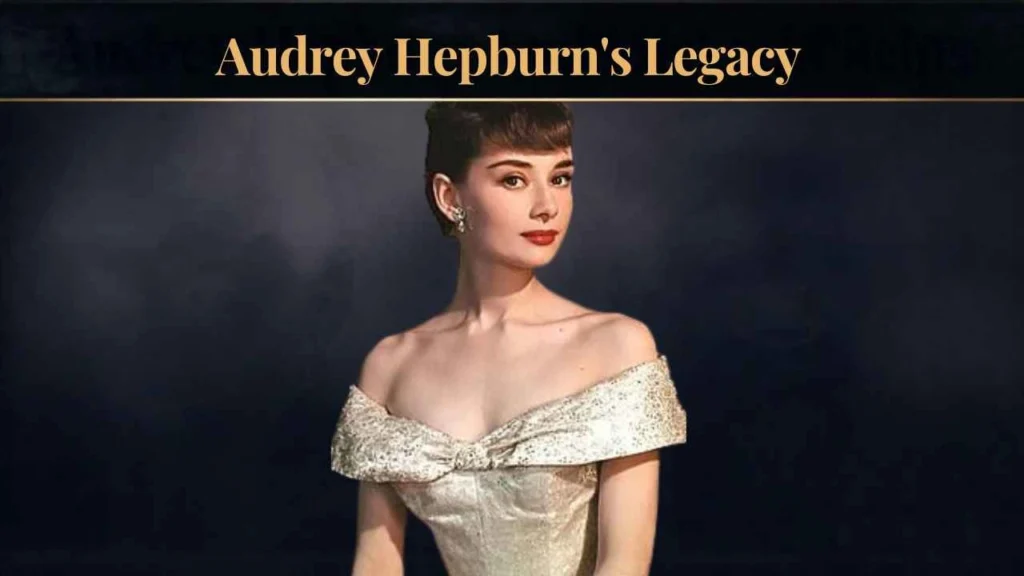
Film Legacy
Hepburn’s acting career remains one of the strongest pillars of her legacy.
Her performances in Roman Holiday, Sabrina, Breakfast at Tiffany’s, The Nun’s Story, My Fair Lady, and Wait Until Dark continue to attract audiences.
Her Academy Award history reinforces the significance of her career. The Academy records five Best Actress nominations and her later humanitarian honor.
Fashion Legacy
Her fashion influence may be nearly as recognizable as her film career.
The clean lines, elegant silhouettes, and restrained styling associated with Hepburn continue to appear in modern fashion references.
That influence isn’t limited to clothing. It extends into photography, beauty, advertising, costume design, and celebrity styling.
Humanitarian Legacy
Her UNICEF work changed how many people remembered her.
She wasn’t simply a former movie star who occasionally appeared at charity events. She became an active international advocate for children’s welfare.
UNICEF continues to maintain an official profile recognizing her service as a Goodwill Ambassador from 1988 to 1993.
Her humanitarian influence even continues through awards carrying her name. UNICEF notes that the Audrey Hepburn Humanitarian Award has been presented to later supporters of children’s causes.
Why Her Influence Crosses Generations
Hepburn’s legacy survives because it exists in several cultural spaces at once.
She belongs to:
- Film history
- Fashion history
- Celebrity culture
- Humanitarian history
- Children’s advocacy
That broad cultural footprint makes her relevant to audiences who may know her for completely different reasons.
Michael Phelps’s Legacy
Olympic Legacy
Phelps’s Olympic résumé is the clearest part of his sporting legacy.
His 28 Olympic medals and 23 Olympic gold medals provide measurable evidence of his competitive success.
The five-Olympics span also demonstrates remarkable longevity at the elite level.
His career is now part of Olympic history rather than merely current sports news.
Influence On Competitive Swimming
Phelps helped bring enormous attention to competitive swimming.
His success also demonstrated the importance of technical specialization, training systems, underwater work, race strategy, recovery, and mental preparation.
For younger swimmers, his career became a reference point for what sustained elite performance could look like.
Mental Health And Advocacy Legacy
His post-competition work adds another dimension.
The Michael Phelps Foundation now emphasizes that physical health and mental wellness belong together. Its programs teach water safety alongside emotional wellbeing, healthy living, confidence, and goal setting.
That approach makes his foundation different from a program focused only on swimming technique.
What Audrey Hepburn And Michael Phelps Have In Common
Discipline And Commitment
Neither career happened by accident.
Hepburn’s path involved ballet training, acting development, demanding productions, and years of professional performance.
Phelps’s path involved repetitive training, technical refinement, international competition, and enormous physical demands.
Their careers demonstrate that professional success often rests on years of preparation that the public never sees.
Global Recognition
Both became recognizable far beyond their home countries.
Hepburn’s films circulated internationally. Phelps competed on the world’s largest sporting stage.
Their names became shorthand for their respective fields.
Mentioning Hepburn and classic cinema often comes to mind. Mention Phelps and Olympic swimming immediately enters the conversation.
Influence Beyond Their Careers
This is perhaps their strongest similarity.
Hepburn didn’t remain defined solely by acting.
Phelps didn’t remain defined solely by swimming.
Both eventually used their public platforms for causes larger than professional achievement.
Hepburn focused on children and humanitarian relief through UNICEF. Phelps focuses on water safety, youth development, mental wellness, and healthy living through his foundation.
Generational And Cultural Impact
Their legacies also show how fame changes across generations.
Hepburn became famous through films and print-era celebrity culture. Her image then survived television, home video, fashion campaigns, and the internet.
Phelps became famous in the era of global sports broadcasting and digital media.
Yet both achieved something remarkably similar: their professional identities became part of a larger cultural story.
Audrey Hepburn And Michael Phelps: Key Facts At A Glance
| Fact | Audrey Hepburn | Michael Phelps |
| Born | May 4, 1929 | June 30, 1985 |
| Birthplace | Brussels, Belgium | Baltimore, Maryland |
| Main career | Acting | Competitive swimming |
| Breakthrough | Roman Holiday | Olympic swimming |
| Major award/achievement | Academy Award for Best Actress | 28 Olympic medals |
| Gold medals | — | 23 |
| Olympic Games | — | 5 |
| Major humanitarian organization | UNICEF | Michael Phelps Foundation |
| Children’s/youth focus | Children’s rights and humanitarian relief | Water safety and youth development |
| Mental wellness work | Not the central focus of her advocacy | Major part of current foundation programming |
| Major cultural influence | Cinema and fashion | Olympic sport and athlete advocacy |
| Death/retirement context | Died January 20, 1993 | Retired from competitive swimming after Rio 2016 |
Frequently Asked Questions About Audrey Hepburn And Michael Phelps
Are Audrey Hepburn And Michael Phelps Related?
There is no established family relationship between Audrey Hepburn and Michael Phelps.
The two are discussed together because they represent highly recognizable figures from different professional fields whose influence extended beyond their original careers.
Why Are Audrey Hepburn And Michael Phelps Mentioned Together?
They can be compared as global icons who achieved exceptional success and later used their public platforms for broader causes.
Hepburn became an international humanitarian advocate through UNICEF. Phelps developed the Michael Phelps Foundation around water safety, youth development, mental wellness, and healthy living.
What Was Audrey Hepburn Famous For?
Audrey Hepburn was famous primarily for her acting career and her influence on fashion and popular culture.
Her major films included Roman Holiday, Sabrina, Breakfast at Tiffany’s, and My Fair Lady. She also became internationally known for her humanitarian work with UNICEF.
What Was Michael Phelps Famous For?
Michael Phelps became famous for his competitive swimming career and extraordinary Olympic record.
He won 28 Olympic medals, including 23 gold medals, across five Olympic Games.
He later became known for his work involving water safety, youth development, and mental health advocacy.
How Many Olympic Medals Did Michael Phelps Win?
Michael Phelps won 28 Olympic medals in total:
- 23 gold
- 3 silver
- 2 bronze
His total is recognized by the Olympic movement as the highest Olympic medal haul.
How Many Olympic Gold Medals Did Michael Phelps Win?
Phelps won 23 Olympic gold medals.
That total forms the largest part of his 28-medal Olympic record.
What Did Audrey Hepburn Do For UNICEF?
Hepburn served as a UNICEF Goodwill Ambassador from 1988 to 1993.
She traveled internationally to visit humanitarian projects, met children and aid workers, spoke to governments and media, and advocated for children affected by poverty, hunger, disease, conflict, and displacement.
Did Audrey Hepburn And Michael Phelps Have Similar Careers?
Not in a literal professional sense.
Hepburn was an actress and humanitarian. Phelps was an Olympic swimmer and later an advocate and foundation leader.
Their similarities appear instead in areas such as discipline, international recognition, public influence, and work beyond their original professions.
What Is Audrey Hepburn’s Legacy?
Hepburn’s legacy combines cinema, fashion, and humanitarian advocacy.
Her film performances remain culturally important, while her UNICEF work created a second legacy centered on children’s welfare.
What Is Michael Phelps’s Legacy?
Phelps’s legacy includes his Olympic achievements, influence on competitive swimming, and his later work through the Michael Phelps Foundation.
The foundation currently combines water safety, mental wellness, healthy living, goal setting, and confidence-building education.
Audrey Hepburn And Michael Phelps: A Lasting Legacy Across Different Fields
Audrey Hepburn and Michael Phelps never shared the same profession, generation, or path to fame.
That’s exactly why their stories are worth examining side by side.
Hepburn built her reputation through acting and became a defining figure in classic cinema. Her fashion influence then expanded her cultural reach, while her UNICEF work transformed her public identity into something larger than Hollywood. UNICEF records that she spent the final years of her life advocating for children around the world.
Phelps built his legacy through competitive swimming. His 28 Olympic medals, including 23 gold medals, made his name inseparable from Olympic history.
But his story didn’t stop when he left competitive swimming.
Through the Michael Phelps Foundation, his public work now reaches into water safety, youth development, healthy living, confidence, resilience, and mental wellness. The foundation reports reaching more than 190,000 participants through programs delivered across all 50 U.S. states and in more than 35 countries.
Their careers therefore reveal two distinct forms of lasting influence.
Hepburn’s cultural footprint grew from film to fashion and eventually humanitarian advocacy. Phelps’s influence grew from sport to youth education, water safety, and mental health awareness.
Neither legacy can be reduced to a single statistic.
For Hepburn, the story isn’t only about an Oscar or a famous film. For Phelps, it isn’t only about 23 Olympic gold medals.
The deeper connection is what happened after extraordinary achievement created a global platform.
Professional excellence can create recognition. What someone does with that recognition can shape a much larger legacy.
That distinction helps explain why these two very different figures continue to attract attention across generations. Audrey Hepburn remains a defining figure in cinema, fashion, and humanitarian history. Michael Phelps remains a defining figure in Olympic swimming while continuing to build a public role around youth wellbeing and water safety.
Their careers took different roads. Their cultural footprints simply became much larger than the roads that created them.

Oliver Harrington is a British author and language researcher known for his engaging writing on the meanings of words, communication, and personal growth. Born in Oxford, England, he developed a passion for literature and etymology at an early age, later studying English Literature before pursuing a full-time writing career. His work combines historical research with practical insights, making complex language concepts easy for readers to understand. Over the years, he has contributed to educational publications, spoken at literary events, and inspired thousands of readers with his thoughtful approach to language. When he is not writing, Oliver enjoys exploring historic libraries, travelling across the British countryside, and researching the origins of English expressions.
Books:
- The Language of Meaning
- Words That Shaped the World
 Charlotte Pembroke
 Edward Whitmore