DesignMode24 interior design is a useful topic to explore if you want a home that looks inviting, feels comfortable, and supports your everyday routine. From choosing the right furniture to improving lighting and organizing small rooms, thoughtful design can make a noticeable difference without requiring a complete renovation.
When you explore DesignMode24 interior design ideas, it’s important to distinguish practical decorating advice from claims about a particular brand or platform. Interior design follows established principles such as space planning, proportion, lighting, color coordination, and functionality. These principles can help you create a home that reflects your personal taste while meeting your daily needs.
If you’re refreshing a living room, designing a compact bedroom, or planning a more functional kitchen, you can start with a few clear decisions. Measure your space, identify your priorities, establish a realistic budget, and choose furniture and finishes that work together.
This guide explains the meaning of DesignMode24 interior design, explores popular decorating styles, and shares practical ideas for different rooms. You’ll also learn how to plan a layout, choose colors and materials, improve storage, and evaluate an online interior design service before relying on its claims.
What Is DesignMode24 Interior Design?
DesignMode24 interior design can refer to online home-design inspiration, practical decorating guidance, or services associated with websites using the DesignMode24 name. The exact meaning depends on the website you visit.
For example, DesignMode24.net describes residential and commercial design services, including interior styling, kitchen and bathroom renovations, lighting, flooring, and outdoor design. Meanwhile, DesignMode24 Interior Design presents home styling ideas and room-by-room decorating guidance. These are different domains, so their offerings shouldn’t automatically be treated as identical.
Designmode24
+1
In practical terms, you can approach DesignMode24 home design through three main goals:
- Improve functionality: Make each room easier to use and maintain.
- Create visual harmony: Coordinate furniture, colors, materials, and lighting.
- Reflect personal style: Choose details that suit your preferences and lifestyle.
Think of interior design as solving a puzzle. Every piece—from the sofa to the ceiling light—needs to fit the overall picture without making daily life harder.
Is DesignMode24 a Recognized Interior Design Style?
DesignMode24 isn’t an established historical design movement in the same sense as Art Deco, Bauhaus, or Mid-Century Modern. It’s better to treat the phrase as a name associated with online design content or services unless a specific, documented methodology establishes otherwise.
Recognized interior design styles have identifiable characteristics. Scandinavian interiors, for example, commonly emphasize simplicity, natural materials, practical furniture, and light-filled spaces. Art Deco is associated with geometric forms, decorative detailing, and luxurious finishes.
You don’t need to follow a named style to create a successful interior. Instead, identify what you enjoy and use established design principles to bring those preferences together.
How to Understand the DesignMode24 Design Concept
When exploring the DesignMode24 design concept, begin with the specific website’s description of its purpose. Determine whether it publishes articles, offers professional consultations, sells products, or provides complete renovation services.
Then focus on the design principles that apply to your project:
- What does the room need to do?
- How much space is available?
- Which furniture pieces must remain?
- What colors and materials suit the existing architecture?
- How much can you spend?
- Which changes can you make yourself?
Answering these questions creates a clear direction before you start shopping or renovating.
Is DesignMode24 an Interior Design Company or an Online Resource?
The answer depends on the domain. Some websites using the DesignMode24 name describe design services, while others focus on home improvement articles and decorating inspiration.
For instance, DesignMode24.net describes itself as a design company and lists services such as kitchen renovations, flooring, lighting, and commercial interiors. Its service pages and contact information should be reviewed directly before you make a purchasing decision.
Designmode24
+1
Here’s how to distinguish the main types of design resources.
| Resource type | What you can expect | What to verify |
| Interior design blog | Decorating ideas, room layouts, and practical guides | Accuracy, author expertise, and supporting evidence |
| Professional design firm | Project planning, consultations, and potentially installation | Business identity, portfolio, scope, and qualifications |
| Interior design software | Digital floor plans, layouts, and possibly 3D visualization | Available features, compatibility, and pricing |
| Furniture retailer | Furniture, lighting, and decorative accessories | Dimensions, materials, delivery, and return policies |
| Renovation contractor | Construction, installation, and remodeling work | Licensing where required, insurance, references, and written estimates |
Don’t assume a website provides software simply because it discusses digital room planning. Likewise, an attractive portfolio doesn’t independently verify every business claim.
Before paying for a service, confirm what the provider will deliver, how much it costs, and which responsibilities fall to you.
Core Principles of the DesignMode24 Interior Design Approach
Good interior design principles help you make decisions that work together. You don’t need expensive furniture or a large house. You need a clear plan that connects appearance with practical use.
Put Function Before Aesthetics
A room should support the activities that take place in it. A beautiful living room won’t feel successful if there’s nowhere comfortable to sit or insufficient space to walk between the furniture.
Start by listing your everyday needs. A family room might require durable upholstery, closed storage, and flexible seating. A bedroom may need a restful atmosphere, accessible clothing storage, and suitable bedside lighting.
Once these needs are clear, choose decorative elements that support them.
Balance Proportion and Scale
The furniture scale describes how large an item appears in relation to its surroundings. A deep sectional sofa can overwhelm a narrow living room, while tiny furniture may look lost in a large open space.
Measure the room before buying major pieces. Consider furniture height as well as width and depth, especially when working with low ceilings, narrow doorways, or unusually shaped rooms.
Use these guidelines:
- Leave practical walking routes between furniture pieces.
- Check that drawers, doors, and cabinets can open fully.
- Keep seating appropriately positioned around tables.
- Compare furniture dimensions with the entire room rather than one empty corner.
- Balance large pieces with smaller accessories instead of filling every available surface.
Create Visual Balance and Cohesion
Visual balance means distributing visual weight so a room feels comfortable rather than lopsided. You can achieve it through furniture placement, color, texture, lighting, and decorative objects.
For example, a large sofa on one side of a living room may feel balanced by two chairs, a floor lamp, and artwork on the opposite side. The arrangement doesn’t need to be symmetrical. It simply needs to feel intentional.
A consistent color palette also helps connect different areas. Repeat selected colors in curtains, cushions, artwork, or rugs to create a relationship between otherwise different objects.
Design for Comfort and Accessibility
Comfort involves more than soft cushions. It includes clear circulation routes, reachable storage, suitable lighting, supportive seating, and enough room to move safely.
If someone in your household uses a mobility aid, has limited reach, or needs additional clearance, include those requirements in the floor plan from the beginning.
Keep frequently used objects within easy reach and avoid placing essential items behind heavy furniture. For complex accessibility or renovation requirements, consult an appropriately qualified professional.
Popular Interior Design Styles to Explore
Choosing an interior design style helps you narrow your options. You can use one style throughout your home or combine compatible elements to create a more personal result.
The descriptions below summarize common characteristics of established design styles. They aren’t claims that DesignMode24 officially endorses each style.
| Interior design style | Common characteristics | Ideas you can try |
| Scandinavian | Simple forms, natural wood, practical furniture, light colors | Add a wood coffee table, neutral textiles, and uncluttered shelving |
| Minimalist | Restrained decoration, purposeful objects, clean lines | Keep essential furniture and reduce unnecessary accessories |
| Contemporary | Current design choices, varied materials, clean forms | Combine streamlined furniture with carefully selected artwork |
| Mid-Century Modern | Organic shapes, tapered legs, functional furniture | Use a vintage-inspired chair and warm wood finishes |
| Japandi | Japanese and Scandinavian influences, natural textures, simplicity | Pair low-profile furniture with linen, wood, and muted colors |
| Traditional | Classic furniture forms, detailed finishes, established patterns | Introduce symmetrical arrangements and timeless textiles |
| Transitional | A blend of traditional and contemporary elements | Combine a classic sofa shape with modern lighting |
| Rustic | Natural textures, visible grain, weathered finishes | Add reclaimed wood, woven materials, and textured fabrics |
| Organic | Natural forms, earthy colors, tactile materials | Use stone, wood, plants, and softly shaped accessories |
| Art Deco | Geometric motifs, strong contrast, decorative finishes | Add a geometric mirror, metallic accents, or a sculptural lamp |
| Bauhaus | Functional forms, geometric design, integration of art and craft | Choose purposeful furniture with clear shapes and simple detailing |
How to Choose a Style That Fits Your Home
Your home’s existing architecture offers a useful starting point. A historic property may contain original moldings, hardwood floors, or decorative windows that deserve attention. A newer apartment may have simpler lines and an open-plan layout.
Consider these factors before choosing a style:
- Architecture: Work with ceiling height, windows, flooring, and permanent features.
- Lifestyle: Choose materials and furniture that suit your household’s routines.
- Budget: Decide which items deserve investment and where affordable alternatives will work.
- Maintenance: Consider cleaning needs, pets, children, and everyday wear.
- Personal taste: Save examples of rooms you genuinely enjoy rather than copying every trend.
You can combine styles successfully when you repeat shared elements. For instance, Scandinavian and Japandi interiors often work together because both can emphasize simplicity, natural materials, and functional furniture.
How to Plan a Room Layout and Arrange Furniture
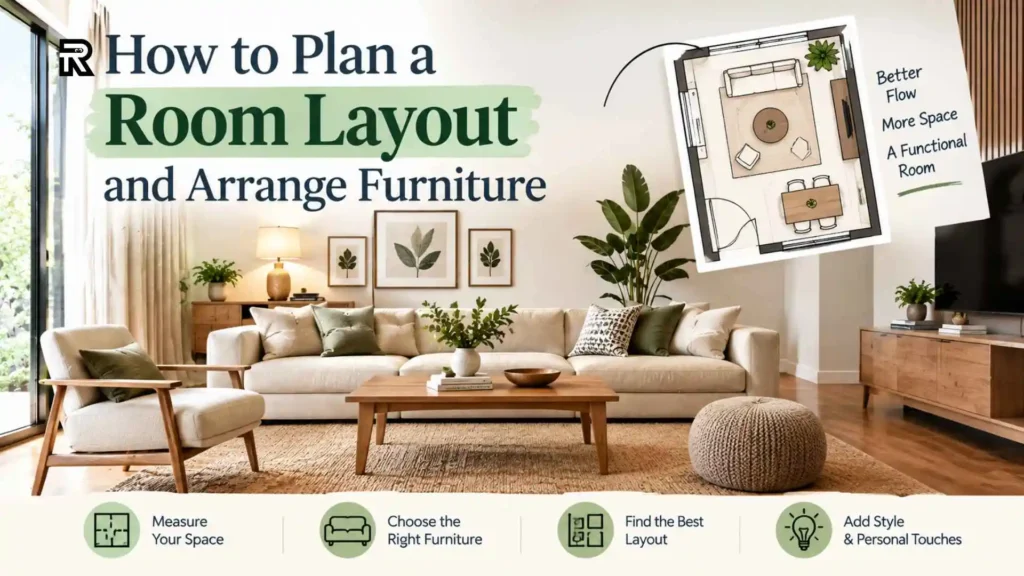
A well-planned layout can make a modest room feel more usable without adding a single square foot. Start with measurements instead of guessing where everything should go.
Measure the Room and Create a Floor Plan
Record the room’s length, width, and ceiling height. Mark the location of doors, windows, radiators, electrical outlets, and permanent architectural features.
Next, measure the furniture you already own. Include the width, depth, and height of each major piece.
A basic floor plan should show:
- Room boundaries and dimensions
- Doorways and door swing directions
- Window positions
- Fixed cabinets and other built-in features
- Major furniture footprints
- Main walking routes
You can draw the plan on paper or use digital room-planning software. The goal is to identify potential problems before moving heavy furniture or spending money.
Plan Traffic Flow and Furniture Clearance
Traffic flow describes how people move through a room. A practical layout lets you reach doors, seating, storage, and frequently used areas without awkward detours.
For example, if the main route from a living room entrance to the kitchen passes directly through the center of a seating arrangement, you may need to reposition the sofa or chairs.
Check whether:
- People can enter and leave the room comfortably.
- Dining chairs can pull out without hitting walls or other furniture.
- Wardrobe doors and drawers open fully.
- Windows and vents remain accessible.
- Furniture doesn’t obstruct important electrical or safety features.
There isn’t one universal clearance measurement for every room. The right amount depends on the furniture, the activity, the users, and applicable accessibility requirements.
Test Furniture Placement Before Buying
Use painter’s tape to mark the proposed footprint of large furniture on the floor. This simple test helps you judge whether a sofa, dining table, or bed will leave enough usable space.
If you have access to digital tools, compare two or three alternative layouts. Consider how each arrangement affects movement, natural light, storage, and conversation.
A useful rule is to plan the major furniture first and add decorative items afterward. Accessories can’t fix a fundamentally awkward layout.
How to Choose Colors, Materials, and Interior Finishes
Color and materials influence how a room feels, how different objects relate to one another, and how much maintenance your home requires. A coordinated room doesn’t need every surface to match. It needs a clear visual relationship between its elements.
Build a Balanced Color Palette
A color palette is the group of colors you use throughout a room. Start with a dominant color, add supporting shades, and finish with a few accents.
For example, a living room might combine warm white walls, natural oak furniture, muted green cushions, and black metal details. Each element contributes something different while maintaining a consistent appearance.
The following table offers a practical starting point.
| Color direction | Suitable materials | Overall effect |
| Warm neutrals | Oak, linen, cream upholstery | Soft and welcoming |
| Cool neutrals | Gray fabrics, glass, brushed metal | Restrained and contemporary |
| Earthy tones | Natural wood, terracotta, woven textiles | Grounded and relaxed |
| Monochromatic | Different shades of one color | Cohesive and understated |
| Contrasting accents | Neutral backgrounds with selected bold colors | Energetic and expressive |
A commonly used decorating guideline is the 60-30-10 color rule: approximately 60% dominant color, 30% secondary color, and 10% accent color. Treat it as a flexible starting point, not a strict requirement.
Before committing to paint, test samples on the actual walls. Daylight, artificial lighting, nearby materials, and the direction of the windows can all change how a color appears.
Coordinate Materials and Textures
Different materials add character through their color, surface, weight, and texture. Natural wood can soften a room with metal furniture, while linen and wool can make a minimalist interior feel more inviting.
Consider combining:
- Wood: Useful for flooring, cabinetry, dining tables, and shelving.
- Metal: Adds structure through furniture frames, handles, and light fixtures.
- Glass: Helps maintain visual openness in selected furniture and decorative pieces.
- Natural stone: Offers distinctive patterns and durable surfaces when properly selected and maintained.
- Linen and cotton: Provide breathable, versatile options for curtains and soft furnishings.
- Leather and wool: Add tactile variety to upholstery, rugs, and accessories.
Material selection should also reflect the room’s purpose. Kitchen countertops need to withstand the conditions of food preparation, while bathroom finishes must suit moisture exposure. A delicate fabric may work beautifully in a formal sitting area but require more maintenance in a busy family room.
Lighting Ideas for a Functional and Comfortable Home
Lighting can change how you use a room and how its colors and textures appear. Rather than relying on one ceiling fixture, combine different light sources to support different activities.
Understand the Three Main Types of Lighting
Ambient lighting provides general illumination. Ceiling fixtures, recessed lights, and some wall lights can serve this purpose.
Task lighting helps you complete specific activities. Examples include desk lamps, kitchen worktop lights, bedside reading lamps, and bathroom mirror lights.
Accent lighting highlights selected features, such as artwork, shelves, architectural details, or decorative objects.
| Room | Lighting priority | Practical option |
| Living room | Flexible general and accent lighting | Ceiling fixture, floor lamp, and reading light |
| Bedroom | Comfortable ambient and bedside lighting | Dimmable ceiling light and bedside lamps |
| Kitchen | Clear visibility over work surfaces | General lighting plus suitable task lights |
| Bathroom | Even illumination around the mirror | Appropriate mirror lights and general lighting |
| Home office | Comfortable visibility at the desk | Adjustable task lamp and controlled screen glare |
| Entryway | Safe movement and clear visibility | Ceiling fixture with supplementary wall lighting |
Make Better Use of Natural Light
Keep windows unobstructed where practical and choose curtain fabrics according to your privacy needs. Sheer curtains can soften daylight, while lined curtains offer greater light control and privacy.
Position desks and reading chairs where daylight supports the activity without creating distracting glare. If a room receives limited natural light, combine appropriate artificial lighting with carefully chosen wall colors and reflective surfaces.
Lighting upgrades involving new wiring or electrical installations should follow local regulations and be handled by qualified professionals where required.
DesignMode24 Interior Design Ideas for Small Homes
Small homes need thoughtful planning because every piece of furniture occupies a larger share of the available floor area. The objective isn’t to make every room look empty. It’s to give essential activities enough space while keeping belongings organized.
Choose Space-Saving and Multifunctional Furniture
Multifunctional furniture serves more than one purpose. A storage bed can hold spare bedding, an ottoman can provide seating and hidden storage, and a folding desk can create a temporary workstation.
Before buying a multifunctional item, consider whether you’ll use all its features. A complicated piece that takes too much effort to operate may not improve your daily routine.
Other useful options include:
- Wall-mounted cabinets that free up floor space
- Tall shelving that uses available vertical space
- Nesting tables that can be separated when needed
- Extendable dining tables for occasional guests
- Storage benches for entryways and bedrooms
- Freestanding organizers that can move with you
Reduce Clutter Without Losing Personality
Clutter management works best when your storage system matches your habits. Keep everyday items near the places where you use them, and store seasonal or occasional-use belongings elsewhere.
Use closed cabinets for items you don’t want on display. Reserve open shelves for books, selected decorative objects, and belongings you can keep organized.
You can also define different zones within one room. A rug might distinguish the living area from the dining space, while a desk placed near a suitable outlet can establish a compact workstation.
Mirrors and light-colored finishes may help a small room feel more open, but they can’t compensate for blocked walkways or oversized furniture. Layout and storage should come first.
Room by Room DesignMode24 Home Design Ideas
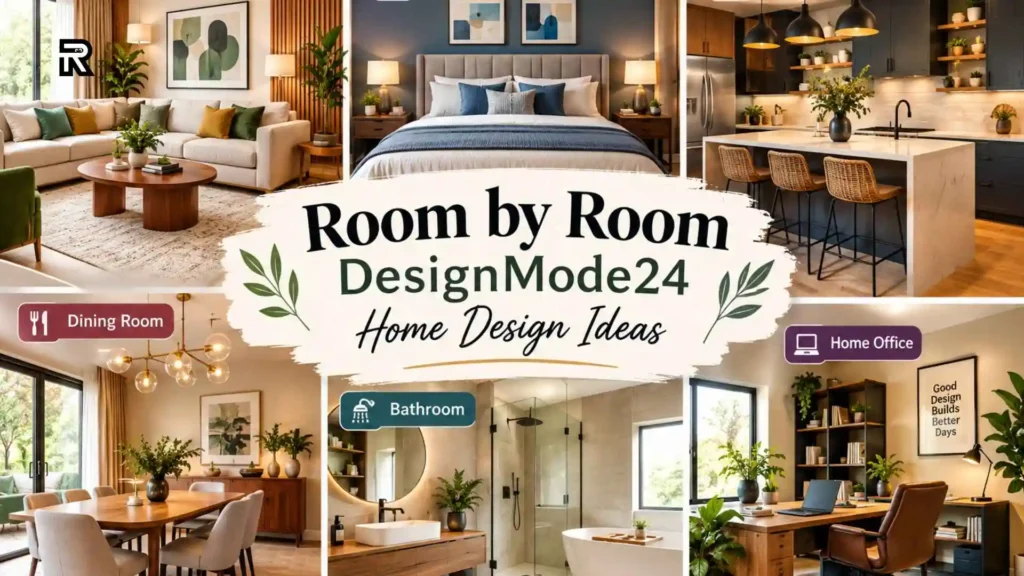
Every room has different functional requirements. Use the following ideas as a starting point and adjust them to your household’s routines.
Living Room Interior Design
A living room needs to support relaxation, conversation, entertainment, and sometimes work. Arrange the main seating around a clear focal point, such as a fireplace, a window, or a television.
Choose a rug large enough to relate the seating area visually. Add a coffee table or side tables where people can comfortably reach drinks, books, and other everyday items.
Layer lighting to accommodate different activities. A ceiling fixture can provide general illumination, while a floor lamp creates a practical reading area.
Avoid buying too many small decorative pieces. A few carefully chosen objects often create a more cohesive look than a crowded collection.
Bedroom Interior Design
The bedroom should make sleeping, dressing, and storing clothing convenient. Begin by choosing a bed size that leaves enough room for movement and access to storage.
Bedside tables provide space for lamps, glasses, books, and other essentials. If the room is narrow, consider wall-mounted bedside shelves rather than bulky tables.
Choose curtains based on daylight and privacy requirements. Coordinate bedding, upholstery, and wall colors without making every element identical.
For compact bedrooms, under-bed storage and vertical wardrobes can help you manage belongings while keeping frequently used items accessible.
Kitchen Interior Design
Kitchen design must support food preparation, cooking, cleaning, and storage. Arrange work areas so that you can move between the refrigerator, sink, and cooking surface without unnecessary obstacles.
Before purchasing cabinets or appliances, check the room dimensions, door openings, plumbing locations, and available electrical connections.
Useful improvements include:
- Grouping cooking tools near the cooking area
- Keeping frequently used ingredients easy to reach
- Providing appropriate task lighting over work surfaces
- Choosing countertops that suit your maintenance preferences
- Using drawer organizers to reduce wasted storage space
For major kitchen renovations, consult qualified professionals about ventilation, plumbing, electrical work, and building requirements.
Bathroom Interior Design
A functional bathroom needs suitable ventilation, moisture-resistant finishes, accessible storage, and adequate lighting. Decorative choices should support these requirements rather than interfere with them.
Use vanity cabinets, recessed shelving where appropriate, and organizers to manage toiletries. Select flooring and other finishes according to wet-area suitability and cleaning needs.
Mirror lighting should provide useful visibility without creating uncomfortable shadows or glare. If you’re replacing plumbing fixtures or electrical components, check applicable safety requirements before work begins.
Home Office Design
A productive home office starts with a comfortable workstation. Choose a desk that fits your equipment and a chair that supports your body during regular use.
Position your screen to reduce glare from windows and lights. Keep chargers, cables, and essential documents organized so they don’t consume valuable desk space.
If you work in a shared room, define the workstation with a desk, task lamp, and compact storage unit. A consistent setup helps distinguish work activities from relaxation without requiring a separate office.
Entryway Design
An entryway handles the everyday arrival and departure routine. Shoes, bags, coats, keys, and umbrellas need designated places so they don’t spread into other rooms.
A compact bench can provide seating while putting on shoes. Wall hooks and a small tray can organize frequently used belongings, while a mirror can serve a practical purpose near the door.
Keep the main entrance and exit route clear. In a narrow hallway, choose shallow furniture or wall-mounted storage instead of a deep console table.
Furniture Selection, Placement, and Personal Décor
Furniture and accessories give a room its character, but each item should earn its place. The right choices depend on the available space, the intended use, and the level of maintenance you’re comfortable with.
Select Furniture That Fits the Room
Measure the space and compare it with the product dimensions before ordering. Check delivery access too, particularly if your home has narrow stairs, small elevators, or tight doorways.
Consider the following when comparing furniture:
- Dimensions and proportions
- Comfort and ergonomic support
- Upholstery and surface durability
- Storage capacity
- Cleaning and maintenance requirements
- Compatibility with existing furniture
- Delivery, assembly, and return conditions
Buying furniture gradually can help you make more thoughtful decisions. Start with essential pieces, test how the room works, and then add secondary items.
Add Personality Through Decorative Accessories
Artwork, books, indoor plants, cushions, throws, and family photographs can make an interior feel personal. Handmade objects and travel souvenirs can also provide meaningful details without requiring a particular decorating style.
Try grouping accessories by color, material, or theme. For example, a wooden tray, a small ceramic vase, and a book can create a coordinated coffee-table arrangement.
However, don’t feel compelled to decorate every empty surface. Negative space gives furniture and artwork room to stand out.
Budget Friendly DesignMode24 Interior Design Ideas
You don’t need to replace everything to improve your home. Often, rearranging furniture, updating a few finishes, and solving a storage problem can make a room more comfortable.
Plan Your Budget Before Making Changes
Divide your budget into essential repairs, functional improvements, furniture, lighting, and decorative accessories. This makes it easier to distinguish necessary spending from optional purchases.
| Improvement | Budget-conscious approach | What to consider |
| Walls | Repaint selected areas | Surface preparation and paint quality |
| Furniture | Rearrange or reuse existing pieces | Condition, dimensions, and comfort |
| Lighting | Replace selected fixtures or add lamps | Electrical requirements and light output |
| Storage | Add organizers or freestanding shelving | Available space and weight limits |
| Décor | Refresh cushions, curtains, or artwork | Color coordination and durability |
| Flooring | Repair or refinish where suitable | Existing material and installation costs |
Get written estimates for substantial renovation work and compare what’s included. Labor, materials, removal, delivery, and finishing costs can make two apparently similar quotes very different.
Make Changes in the Right Order
Start with problems that affect everyday life. Repair damaged surfaces, improve inadequate lighting, and resolve storage or circulation issues before spending heavily on accessories.
A sensible order is:
- Address safety concerns and essential repairs.
- Improve the furniture layout.
- Resolve lighting and storage problems.
- Update paint and selected finishes.
- Add textiles, artwork, and decorative objects.
This approach reduces the risk of buying attractive items that don’t work with the finished room.
A Step by Step Interior Design Planning Process
A clear process helps you avoid expensive mistakes and makes large projects easier to manage. You can apply these steps to one bedroom or an entire home.
- Define your goals. Identify what needs to change and which activities the room must support.
- Measure the space. Record dimensions, doors, windows, outlets, and permanent features.
- Set a realistic budget. Include furniture, materials, labor, and a contingency for unexpected costs.
- Choose your design direction. Collect references that match your taste and the home’s architecture.
- Create a floor plan. Test furniture arrangements and maintain practical walking routes.
- Select essential furniture. Check dimensions, comfort, materials, and storage capacity.
- Plan lighting and colors. Coordinate natural daylight, fixtures, wall colors, and finishes.
- Organize storage. Give everyday belongings accessible, designated places.
- Add personal details. Introduce artwork, textiles, plants, and meaningful objects.
- Review the finished room. Check comfort, accessibility, movement, lighting, and spending.
Don’t rush the process. Living with a proposed layout for a few days, when possible, can reveal problems that aren’t obvious on paper.
Interior Design Software and 3D Visualization
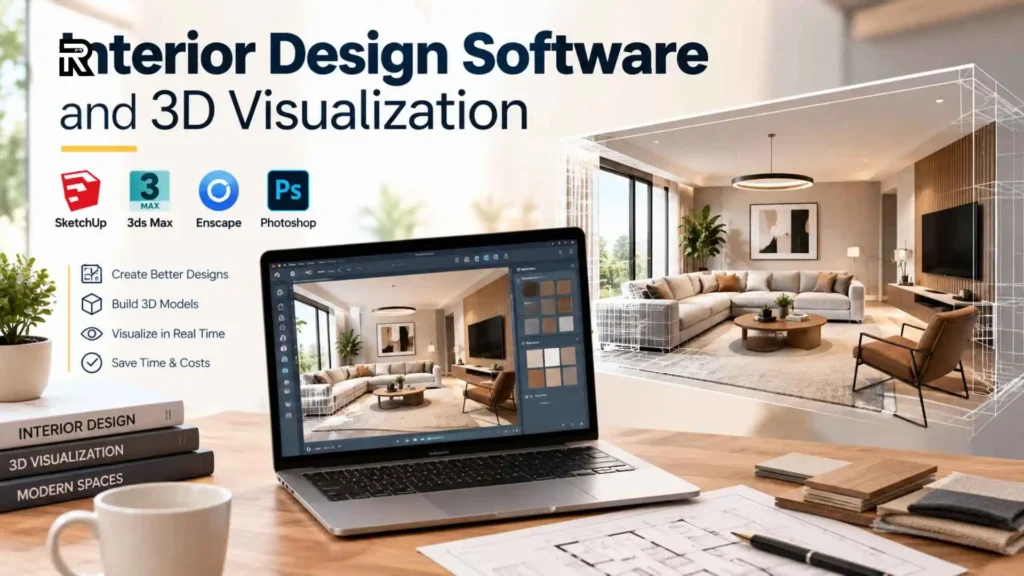
Digital tools can make planning easier, especially when you’re comparing furniture arrangements or working with a room that has unusual dimensions.
What Interior Design Software Can Do
Depending on the product, interior design software may let you draw floor plans, position furniture, compare finishes, or create three-dimensional room views.
Common features include:
- Digital floor plans with measurements
- Furniture placement and layout testing
- Three-dimensional room visualization
- Material and color libraries
- Image exports for comparing design options
- Collaboration or project-sharing tools in some products
Not every tool includes all these features. Check the product’s current documentation, supported devices, pricing, and export options before relying on it.
Does DesignMode24 Offer Interior Design Software?
The answer depends on the particular DesignMode24 website. Some sites under this name describe home improvement content, while others present design services. Their names alone don’t establish that they offer the same software or platform.
Review Pricing, Credentials, and Policies
Before committing to a project, check:
- Whether the business provides identifiable contact information
- Whether its portfolio contains specific, verifiable projects
- Whether qualifications match the work being offered
- Whether quotations clearly explain the scope of work
- Whether payment and cancellation terms are available
- Whether the privacy policy explains how submitted information is handled
- Whether contractors meet relevant local licensing and safety requirements
Ask who will perform the work and whether installation, materials, revisions, and project management are included in the price.
A polished website can help you understand a provider’s presentation, but it doesn’t independently establish service quality, professional credentials, or successful project delivery.
Common Interior Design Mistakes and How to Avoid Them
Even a well-intentioned makeover can create problems when planning comes second to appearance. Fortunately, most common mistakes are easier to prevent than to fix.
| Common mistake | Why it causes problems | Practical solution |
| Buying furniture without measuring | Items may block movement or overwhelm the room | Check dimensions and test the layout first |
| Ignoring storage | Everyday belongings accumulate on visible surfaces | Plan storage around daily routines |
| Relying on one light source | Some areas may remain dim or uncomfortable | Combine ambient, task, and accent lighting |
| Using too many competing colors | The room can feel visually disconnected | Repeat a limited group of complementary colors |
| Following every trend | Furniture and finishes may stop suiting your taste | Prioritize lasting needs and personal preferences |
| Choosing unsuitable materials | Cleaning and maintenance become difficult | Match materials to the room’s conditions |
| Filling every empty corner | The space can feel crowded | Preserve useful circulation space and visual breathing room |
| Skipping budget planning | Costs can exceed what you intended to spend | Set priorities and compare written estimates |
| Trusting unsupported service claims | You may misunderstand what a provider offers | Verify the specific website and written terms |
Remember that a successful interior isn’t simply a collection of attractive objects. It is a coordinated environment that supports the people who use it.
Frequently Asked Questions About DesignMode24 Interior Design
What Is DesignMode24 Interior Design?
DesignMode24 interior design is a phrase associated with online home-design inspiration and websites presenting design-related content or services. Its precise meaning depends on the domain. The phrase itself doesn’t establish a separate, formally recognized interior design movement.
Is DesignMode24 a Recognized Interior Design Style?
DesignMode24 isn’t an established historical movement like Scandinavian design, Art Deco, or Bauhaus. You can still use practical principles such as balanced proportions, functional furniture arrangements, coordinated colors, and layered lighting when exploring ideas associated with the name.
Is DesignMode24 an Interior Design Company?
Some websites using the DesignMode24 name describe professional design services, while others publish home improvement content. Check the exact domain, business information, service descriptions, and contact details before assuming that a particular website provides professional design work.
How Can You Apply DesignMode24 Interior Design Ideas at Home?
Start by measuring the room and identifying its main purpose. Then create a furniture layout, choose a color palette, plan lighting, and organize storage. Add artwork, textiles, and other decorative details after addressing the room’s functional needs.
Can DesignMode24 Interior Design Ideas Work in Small Homes?
Yes. General interior design principles can help you make better use of limited space. Consider compact furniture, vertical shelving, storage beds, wall-mounted cabinets, and multifunctional pieces. Keep circulation routes clear and avoid buying furniture before checking its dimensions.
Does DesignMode24 Offer Interior Design Software?
Software availability depends on the specific website. Verify any claimed digital planning tools through current product pages or official documentation. A website that publishes decorating advice doesn’t necessarily provide interactive floor plans, 3D visualization, or downloadable applications.
How Can You Use DesignMode24 Ideas on a Budget?
Reuse furniture, rearrange existing pieces, repaint selected surfaces, and update accessories instead of replacing everything. Set priorities before shopping and reserve funds for essential repairs. Compare product quality and installation costs rather than choosing items on purchase price alone.
When Should You Hire a Professional Interior Designer?
Consider professional help when you need a complex layout, extensive renovations, detailed material specifications, or a coordinated plan for several rooms. Qualified specialists may also be necessary for structural changes, electrical installations, plumbing, and projects involving specific accessibility or building requirements.
Conclusion: Put DesignMode24 Interior Design Ideas Into Practice
DesignMode24 interior design offers a useful starting point for exploring home styling, practical decorating, and ways to improve your living environment. However, the exact services or content associated with the name depend on the website you’re visiting.
The most useful approach is to combine your personal style with established interior design principles. Measure your rooms, choose furniture that fits, coordinate colors and materials, and plan lighting around your everyday activities. Give storage and circulation the same attention as decorative details.
You don’t need to transform your entire home at once. Choose one room, identify its biggest problem, and make a plan that fits your budget. Once the layout works, introduce the finishes and accessories that make the space feel like yours.
Ultimately, a comfortable home isn’t defined by how many trends it follows. It’s defined by how well it supports your life, reflects your personality, and continues to work as your needs change.

Charlotte Pembroke is a British writer and cultural commentator who specialises in the history and evolution of the English language. Raised in Cambridge, England, she built a career around making language and communication more accessible to everyday readers through informative and engaging books. Her writing blends historical facts with modern examples, helping readers appreciate the stories behind common words and phrases. Charlotte has written for educational magazines, participated in literary conferences, and continues to research how language influences society and culture. Outside her professional work, she enjoys reading classic novels, visiting museums, and mentoring aspiring writers.
Books:
- The Hidden Stories of English Words
- Understanding Meaning in Modern Language
 Edward Whitmore
 Oliver Harrington