
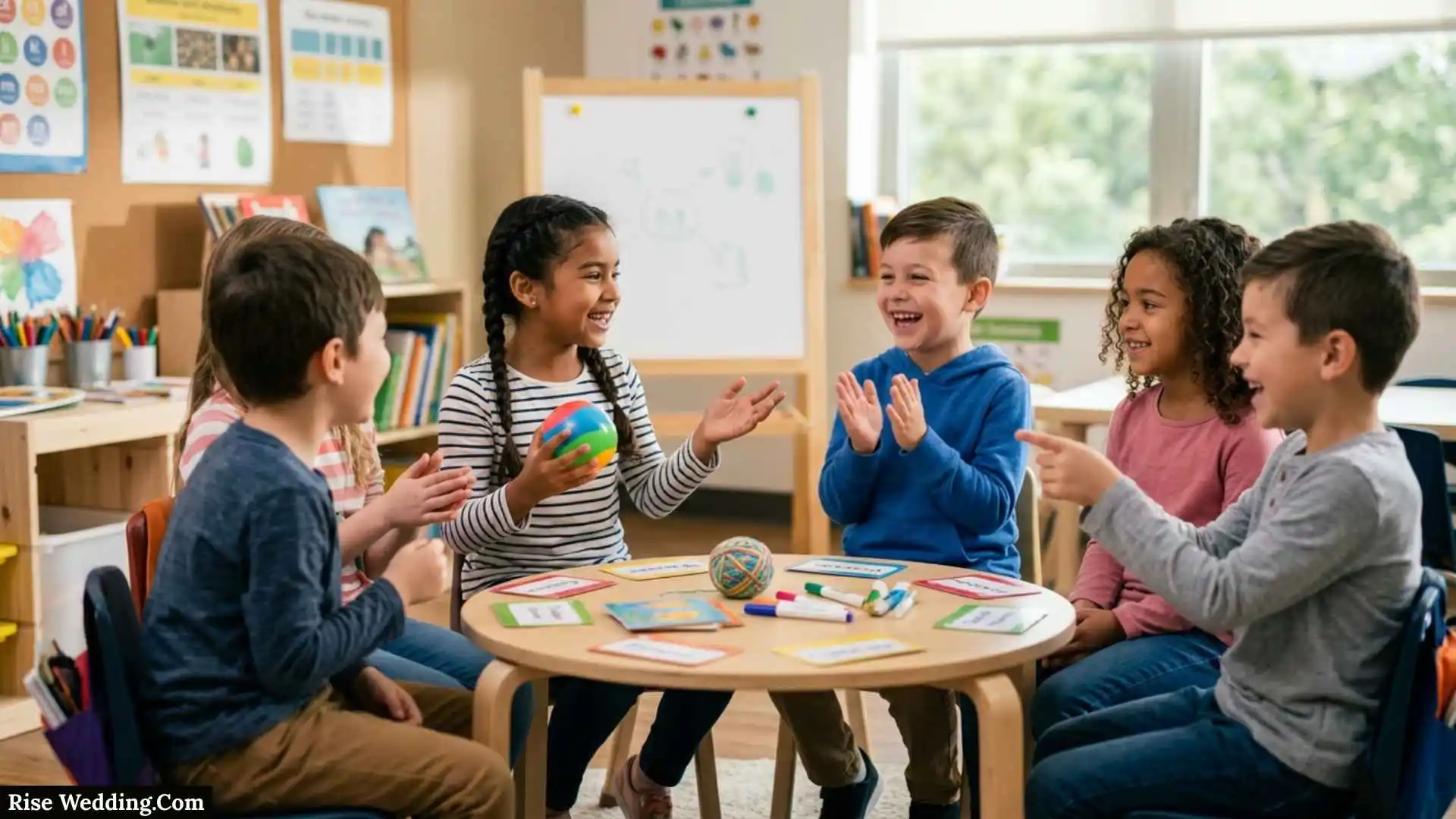
The first few minutes of a new class can be exciting, but they can also feel uncomfortable for children who do not know their classmates yet. Icebreakers for elementary students give kids a simple reason to talk, move, laugh, create, and work together without making introductions feel forced.
The best classroom icebreakers are not just random games. A good activity has a clear purpose: helping students learn names, find common interests, practice communication, build confidence, or become comfortable working with classmates. It should also match the children’s age, energy level, classroom size, and comfort level.
This guide gives you elementary icebreaker activities, from no-prep five-minute games to team challenges and first-day-of-school activities. You will also find grade-level recommendations, ideas for shy students, indoor options, classroom-management tips, a decision guide, realistic examples, common mistakes, and answers to frequently asked questions.
Quick Answer: What Are the Best Icebreakers for Elementary Students?
Some of the most useful icebreakers for elementary classrooms include Name and Motion, Find Someone Who, Would You Rather, Human Bingo, Partner Interviews, Four Corners, Mystery Bag, Common Ground, Freeze Dance, Classroom Scavenger Hunt, Draw and Share, and Team Tower Challenge.
For younger children, choose activities with simple instructions, pictures, movement, and short turns. Older elementary students can handle more complex questions, teamwork, problem-solving, and friendly discussion.
The right choice also depends on your goal:
| Your Goal | Best Icebreaker |
| Learn students’ names | Name and Motion |
| Fill 5 minutes | This or That |
| Help children meet many classmates | Find Someone Who |
| Include quiet students | Draw and Share |
| Get energetic students moving | Four Corners |
| Build teamwork | Tower Challenge |
| Start the school year | Human Bingo |
| Welcome a new student | Partner Interview |
| Reconnect after a break | Common Ground |
| Connect an icebreaker to learning | Mystery Word |
What Is an Icebreaker for Elementary Students?
An icebreaker is a short activity that helps people become more comfortable interacting with one another. In elementary classrooms, icebreakers are often used as get-to-know-you activities, first-day games, classroom community builders, morning meeting activities, or transition activities.
The purpose is not necessarily to make every child become friends immediately. Instead, a well-planned activity creates a low-pressure opportunity for students to communicate and discover something about one another.
That distinction matters.
An icebreaker should not become a forced performance where every child must reveal something personal in front of the entire class. It can be as simple as choosing between two foods, drawing a favorite animal, or working with three classmates to solve a challenge.
Why Are Classroom Icebreakers Useful?
Icebreakers can support classroom connection when they are thoughtfully designed and facilitated. The CDC describes school connectedness as students feeling that adults and peers care about them and their learning, including feelings of being valued, supported, and belonging at school. The CDC also identifies opportunities for students to get to know and work with peers as strategies that can support peer connection.
CASEL similarly emphasizes supportive classroom climates, trusting relationships, student voice, belonging, and opportunities for students to work together.
That does not mean one five-minute game will automatically create a strong classroom community. The larger environment matters more. Icebreakers are one small tool teachers can use alongside consistent routines, respectful communication, cooperative learning, and caring relationships.
They Give Students an Easy Starting Point
A child who does not know anyone may not know how to begin a conversation.
A simple prompt changes that:
“What’s your favorite animal?”
Now the student has something concrete to discuss.
They Help Students Discover Common Interests
Children may discover that classmates enjoy the same sports, books, games, foods, animals, or hobbies.
These small discoveries can make future interactions easier.
They Create Opportunities for Participation
A good icebreaker can involve speaking, listening, moving, drawing, choosing, or cooperating.
That variety is important because students do not all participate comfortably in the same way.
What Makes an Elementary Icebreaker Actually Work?

A fun activity is not automatically a good classroom activity. The strongest options usually have a few things in common.
Simple Instructions
Children should understand the basic rule quickly.
If an activity needs a five-minute explanation before anyone can start, simplify it.
A useful teacher test is:
Can I demonstrate the activity faster than I can explain it?
If yes, demonstrate it.
Low Social Pressure
Students should not feel that they are being tested on how funny, confident, popular, or interesting they are.
Instead of:
“Stand in front of everyone and tell us your most embarrassing moment.”
Use:
“Tell a partner your favorite thing to do after school.”
The second option gives children more control.
Active Participation
Students should have something meaningful to do.
That might mean:
- Asking a question
- Finding a partner
- Drawing
- Moving
- Guessing
- Building
- Choosing
- Listening
- Solving a problem
A Clear Time Limit
Tell students how long they have.
For example:
“You have three minutes to find two things you have in common.”
A visible countdown can make transitions easier.
An Age-Appropriate Challenge
Kindergarten students may need pictures, repetition, and movement.
Fifth graders may prefer mystery games, challenges, debates, and problem-solving.
The same basic idea can often be adapted for different grades.
40 Icebreakers for Elementary Students
The following activities cover different ages, group sizes, energy levels, and classroom situations.
1. Name and Motion
Students sit or stand in a circle. Each child says their name and adds a simple movement.
For example:
“I’m Ahmed,” followed by a clap.
The class repeats:
“Hi, Ahmed!”
Then the next student takes a turn.
Best for: Kindergarten through Grade 3
Time: 5–10 minutes
Materials: None
Teacher tip: Keep movements simple. This is about remembering names, not creating the most impressive action.
2. Find Someone Who
Give students a list of simple prompts.
Examples:
- Find someone who likes apples.
- Find someone who has a pet.
- Find someone who likes drawing.
- Find someone who enjoys soccer.
- Find someone who has visited another city.
Students walk around and talk to classmates who match the descriptions.
Best for: Grades 2–5
Time: 10–15 minutes
Materials: Optional worksheet
Easy variation: Instead of requiring students to complete every box, ask them to find three classmates with different interests.
3. This or That
Give students two choices.
Examples:
- Dogs or cats?
- Summer or winter?
- Pizza or burgers?
- Books or movies?
- Drawing or singing?
Students raise a hand, point, or move to different sides of the room.
Best for: Kindergarten–Grade 5
Time: 5–10 minutes
Materials: None
This is particularly useful when you need a quick activity before a lesson.
4. Would You Rather?
Ask playful questions with two possible choices.
Examples:
- Would you rather fly or breathe underwater?
- Would you rather have a pet dinosaur or a robot?
- Would you rather live in a treehouse or a castle?
- Would you rather be able to talk to animals or speak every language?
Ask students to explain their choices to a partner.
5. Human Bingo
Create a bingo grid containing statements such as:
- Likes pizza
- Has a pet
- Likes reading
- Plays a sport
- Likes drawing
- Has a favorite superhero
Students find classmates who match the statements.
Best for: Grades 2–5
Time: 10–20 minutes
Important: Keep prompts inclusive. Avoid squares that assume every child has a particular family structure, vacation experience, possession, or financial opportunity.
6. Partner Interview
Pair students and give each pair three questions.
For example:
- What’s your favorite school subject?
- What’s something you enjoy doing?
- What’s your favorite animal?
Afterward, students introduce their partner.
Best for: Grades 2–5
Time: 10–15 minutes
For shy children, allow them to introduce their partner from their seat rather than standing at the front.
7. Favorite Things Circle
Students sit in a circle and answer one easy question.
Try:
- Favorite food?
- Favorite animal?
- Favorite color?
- Favorite game?
- Favorite book?
Use only one question per round.
8. Mystery Bag
Put a classroom object into an opaque bag.
Students feel the object without looking and guess what it is.
For a get-to-know-you version, place several objects in the bag and ask students which one represents something they enjoy.
9. Four Corners
Label four corners of the classroom with four choices.
For example:
Dogs | Cats | Fish | Birds
Ask students to choose their favorite type of pet and move to the corresponding corner.
Then students talk with others in that corner.
Best for: Classes with extra energy
Materials: Four signs
10. Common Ground
Put students into groups of three or four.
Give them three minutes to find three things everyone in the group has in common.
For example:
“We all like chocolate.”
“We all enjoy playing outside.”
“We all like science.”
This activity is particularly useful because students have to listen rather than simply wait for their own turn.
11. Freeze Dance
Play music while students move around.
Stop the music and have everyone freeze.
Add fun instructions:
- Freeze like a superhero.
- Freeze like a robot.
- Freeze like a statue.
- Freeze like your favorite animal.
Best for: Kindergarten–Grade 3
12. Draw and Share
Ask students to draw something they enjoy.
It could be:
- A favorite animal
- A hobby
- A sport
- A food
- A place
- A book
Students first share with a partner.
This is a useful alternative when children are uncomfortable with speaking to the whole class.
13. Two Truths and a Silly Lie
Students say three simple statements about themselves.
Two are true, and one is made up.
For younger children, keep the statements easy:
“I like bananas.”
“I have a blue backpack.”
“I have a pet elephant.”
The class guesses the silly statement.
14. Color Corners
Give each corner a color.
Ask:
“What’s your favorite color?”
Students move to their chosen corner.
Repeat with other topics:
- Favorite season
- Favorite fruit
- Favorite school subject
- Favorite animal
15. Name Toss
Use a soft ball.
One student says another student’s name and gently passes the ball to them.
The receiving student continues.
Safety rule: The ball should be passed rather than thrown across the room.
16. Birthday Line-Up
Ask students to arrange themselves according to their birthday.
You can make it simple:
January → December
For older students, make the challenge harder by asking them to communicate without speaking.
17. Build a Class Story
Start with one sentence:
“One morning, a tiny dragon walked into our classroom.”
Each student adds a sentence.
The teacher can stop the story after several rounds and ask students what happened first, next, and last.
This turns an icebreaker into a simple literacy activity.
18. Classroom Scavenger Hunt
Give students clues related to the classroom.
Examples:
- Find something that starts with B.
- Find something blue.
- Find a book about animals.
- Find something we use every day.
- Find a shape in the classroom.
Best for: Kindergarten–Grade 3
19. Secret Talent
Ask students to share something they can do well.
It could be:
- Drawing
- Building
- Singing
- Remembering facts
- Running
- Solving puzzles
- Telling jokes
Make sharing optional.
20. One Word About Me
Ask each child to choose one word connected to something they like.
Examples:
Space.
Football.
Books.
Dogs.
Art.
For younger students, allow them to draw the word instead.
21. Emoji Check-In
Display several simple emotion faces.
Ask students to choose one that represents how they feel.
They can explain their choice to a partner.
This works especially well after a school break or when students are entering a new classroom.
22. Animal Guessing Game
One student chooses an animal and acts it out.
The class guesses the animal.
For older students, add questions:
“Does it live on land?”
“Does it have fur?”
“Can it fly?”
23. Question Ball
Write simple questions on removable notes attached to a soft ball.
Examples:
- What’s your favorite food?
- What’s your favorite animal?
- What game do you enjoy?
- What’s your favorite subject?
A student catches or receives the ball and answers the nearest question.
24. Secret Identity
One student chooses an animal, object, occupation, or character.
Classmates ask yes-or-no questions until they figure it out.
For younger students, give them a limited category such as animals.
25. What Changed?
One student looks away.
Another student changes one small thing in the classroom.
The first student turns around and tries to identify the change.
This can be used as a quick observation and attention game.
26. Compliment Circle
Students give an appropriate compliment to another classmate.
Examples:
“I like your drawing.”
“You helped me.”
“You were kind.”
Teach students that compliments should focus on positive actions, effort, creativity, or kindness rather than someone’s body or appearance.
27. Silent Line-Up
Ask students to arrange themselves by:
- Birthday
- Height
- First-name alphabetically
- Number of letters in their first name
The challenge is completing the task with limited or no talking.
Best for: Grades 3–5
28. Build the Tallest Tower
Place students into groups of three to five.
Give each group simple materials such as paper cups, index cards, or building blocks.
Set a short time limit.
The goal is to create the tallest stable tower.
The EEF notes that effective collaborative learning needs purposeful structure rather than simply putting students into groups. It also identifies small groups of around three to five pupils with a shared outcome as a promising structure.
29. Mystery Word
Choose a word related to school or a current lesson.
Give students clues one at a time.
For example:
“I am something you use to write.”
“I can have an eraser.”
“I often go inside a pencil case.”
Answer: pencil.
This turns an icebreaker into vocabulary practice.
30. Favorite Book Share
Students tell a partner about a book they enjoy.
They can share:
- The title
- Their favorite character
- What they liked
- Why they would recommend it
Students without a favorite book can choose a story they remember.
31. Three Things I Like
Students share three things they enjoy.
Example:
“I like drawing, mangoes, and football.”
For younger students, they can draw the three answers.
32. Picture Prediction
Show students an interesting picture.
Ask:
“What do you think is happening?”
Students discuss their ideas with a partner.
There can be multiple reasonable answers.
This is especially useful for language development because children practice explaining ideas rather than giving one-word responses.
33. Pass the Smile
One student smiles at another.
That student passes the smile to someone else.
For older students, add names or movements to turn it into a memory challenge.
34. Classroom Superpower
Ask:
“If you could have one superpower at school, what would it be?”
Students might choose:
- Super-speed
- Perfect memory
- Flying
- Talking to animals
- Instant reading
- Time travel
Students can draw their answer or discuss it with a partner.
35. Would You Rather Move?
Combine movement with questions.
For example:
“If you’d rather fly, stand up.”
“If you’d rather breathe underwater, sit down.”
“If you’d rather have a robot, clap twice.”
This is useful when students need to move before beginning seated work.
36. Find Your Match
Prepare pairs of matching cards.
Examples:
- Sun / Moon
- Cat / Dog
- Pencil / Paper
- Book / Library
- Bee / Flower
Give one card to each student.
Students move around and find their matching partner.
Once they find each other, give them a simple question to discuss.
37. Mirror Me
Pair students.
One child slowly makes movements while the other copies them like a mirror.
Switch roles after one minute.
Afterward, ask:
“What made it easy to follow your partner?”
This can introduce ideas about attention, cooperation, and communication.
38. Class Mural
Give each student a small piece of paper.
Ask them to draw something that represents themselves.
Combine the drawings into one classroom display.
The result becomes a visual reminder that each student’s contribution is part of the larger classroom community.
39. Team Puzzle Challenge
Give small groups pieces of a simple puzzle.
The goal is to complete it together within a time limit.
Afterward, ask:
“What did your team do when someone couldn’t find the right piece?”
This creates a natural opportunity to discuss cooperation.
40. The Question Chair
Place one chair at the front or center of the room.
A student sits there only if they want to participate.
Classmates ask light questions such as:
- What’s your favorite animal?
- What’s your favorite subject?
- What game do you enjoy?
- What would you like to learn this year?
Keep participation voluntary and give students the option to answer from their seat instead.
Best Icebreakers by Grade Level
Age matters because elementary students develop different communication, attention, and social skills across the primary years.
Kindergarten Icebreakers
Focus on movement, names, pictures, sounds, and very simple choices.
Good options include:
- Name and Motion
- Freeze Dance
- Animal Guessing
- Color Corners
- Draw and Share
- Pass the Smile
- Mirror Me
Keep instructions short and demonstrate the activity first.
Grade 1 Icebreakers
Grade 1 students can handle slightly longer turns.
Try:
- Favorite Things Circle
- This or That
- Classroom Scavenger Hunt
- Mystery Bag
- Name Toss
- Animal Guessing
- Picture Prediction
Grade 2 Icebreakers
Students can begin handling simple partner and group activities.
Good choices include:
- Find Someone Who
- Partner Interview
- Human Bingo
- Would You Rather
- Common Ground
- Build a Class Story
Grade 3 Icebreakers
Introduce more communication and problem-solving.
Try:
- Silent Line-Up
- Common Ground
- Two Truths and a Silly Lie
- Team Puzzle Challenge
- Mystery Word
- Four Corners
Grade 4 Icebreakers
Older elementary students often enjoy challenges that feel less childish.
Try:
- Secret Identity
- Team Tower Challenge
- Silent Line-Up
- Common Ground
- Question Ball
- Picture Prediction
- Mystery Word
Grade 5 Icebreakers
Fifth graders can usually handle more complex discussion and teamwork.
Try:
- Team Challenges
- Partner Interviews
- Human Bingo
- Silent Line-Up
- Two Truths and a Silly Lie
- Common Ground
- Classroom Superpower
- Mystery Games
The activity should still feel age-appropriate. A fifth-grade icebreaker can be playful without feeling like a preschool game.
Best First-Day Icebreakers for Elementary School

The first day of school is one of the most common reasons teachers search for classroom icebreakers. Current teacher resources commonly emphasize low-pressure games, name activities, scavenger hunts, bingo, movement, and classroom-community activities for this setting.
A useful first-day sequence is:
Start With a Low-Risk Activity
Begin with something everyone can answer.
Example: This or That.
Students do not have to reveal anything personal.
Move to Partner Interaction
Next, let students speak with one classmate.
Example: Partner Interview.
Finish With a Group Challenge
Once students are more comfortable, introduce teamwork.
Example: Common Ground or Team Puzzle Challenge.
This progression is often easier than starting with a large-group performance.
Icebreakers for Shy or Quiet Students
A common mistake is assuming that a quiet child needs to be pushed into speaking publicly.
Instead, create several ways to participate.
Use Pair Sharing First
Talking to one partner usually requires less social pressure than addressing 25 classmates.
Let Students Draw
Drawing can give children a way to communicate before they are ready to speak.
Offer Choice
Instead of saying:
“Everyone must answer this question.”
Try:
“You can answer, draw your answer, or share with a partner.”
Avoid Forced Personal Questions
Do not require children to discuss:
- Family problems
- Money
- Health
- Home circumstances
- Fears
- Private experiences
A classroom icebreaker should create connection without demanding personal disclosure.
Watch for Students Who Become Isolated
The CDC notes that teachers can support classroom connectedness by paying attention to peer relationships and students who appear isolated.
An icebreaker should therefore be more than a game. It can also help a teacher notice which students need additional support joining group activities.
No-Prep Icebreakers for Busy Teachers
If you have no time to print worksheets or prepare materials, try:
- This or That
- Would You Rather
- One Word About Me
- Favorite Things Circle
- Common Ground
- Name and Motion
- Three Things I Like
- Silent Line-Up
- Pass the Smile
- Classroom Superpower
These activities need little or no equipment.
Icebreakers for Large Elementary Classes
Large classes require extra attention to movement and turn-taking.
Use activities where several students participate at once.
Good Choices
- Four Corners
- Human Bingo
- Find Someone Who
- Silent Line-Up
- Color Corners
- Would You Rather Move?
Teacher Tip
Avoid activities where 30 students must each give a long answer to the whole class.
That can consume most of the lesson and cause students to lose attention.
Instead, use:
Think → Pair → Share
Students think individually, discuss with a partner, and then a few volunteers share with the group.
The CDC specifically identifies Think-Pair-Share as a strategy that gives students opportunities to learn about one another through peer discussion.
Icebreakers for Small Classes
Small classes give teachers more flexibility.
Try:
- Partner Interview
- Question Chair
- Common Ground
- Mystery Bag
- Build a Class Story
- Two Truths and a Silly Lie
- Secret Identity
With a very small group, avoid repeating the same activity too often because students may quickly learn all the answers.
Indoor Icebreakers for Rainy Days
When outdoor play is cancelled, students may have extra energy.
Choose activities that provide movement without requiring running.
Good options include:
- Four Corners
- Freeze Dance
- Mirror Me
- Would You Rather Move
- Color Corners
- Silent Line-Up
- Animal Guessing
Set movement boundaries before beginning.
For example:
“Walking feet only.”
“Stay inside your assigned area.”
“Freeze immediately when I raise my hand.”
Icebreakers Without Competition
Not every class needs a winner.
Some children become so focused on winning that they stop listening or cooperating.
The EEF notes that competition can sometimes support collaboration, but overemphasis on competition may shift attention away from the intended learning or interaction.
For a calmer classroom, use:
- Common Ground
- Partner Interviews
- Class Mural
- Draw and Share
- Build a Class Story
- Mirror Me
- Picture Prediction
The goal is connection, not victory.
How to Turn an Icebreaker Into a Learning Activity
One of the easiest ways to make an icebreaker more valuable is to connect it to the lesson.
Language Arts
Use:
- Picture Prediction
- Build a Class Story
- Favorite Book Share
- Mystery Word
Mathematics
Use:
- Number Line-Up
- Math Choice Corners
- “Would You Rather?” with simple comparisons
- Find Someone Who using number properties
Science
Use:
- Animal Guessing
- Mystery Object
- Science Would You Rather
- Picture Prediction
Social Studies
Use:
- Map-based partner questions
- Community role guessing
- Classroom culture discussions
This approach means the activity does not have to compete with learning time. It can become part of the learning experience.
CASEL describes supportive classroom environments and the integration of SEL into academic instruction as complementary approaches, including partner and group activities that develop communication, relationships, teamwork, perspective-taking, and problem-solving.
How to Choose the Right Icebreaker
Use this quick decision framework before selecting an activity.
Need students to learn names?
→ Choose Name and Motion.
Only have five minutes?
→ Choose This or That.
Students need movement?
→ Choose Four Corners or Freeze Dance.
Are Students Shy?
→ Choose Draw and Share or Partner Interview.
Do you want students to meet many classmates?
→ Choose Find Someone Who or Human Bingo.
Do you want teamwork?
→ Choose Common Ground or Team Tower Challenge.
Students are older and dislike childish games?
→ Choose Mystery Games, Silent Line-Up, or Team Challenges.
You want to connect the activity to a lesson?
→ Choose Mystery Word, Picture Prediction, or Build a Class Story.
The class is extremely energetic?
→ Choose a structured movement activity with clear boundaries.
Icebreaker Comparison Table
| Activity | Time | Group Size | Movement | Materials | Best Use |
| Name and Motion | 5–10 min | Whole class | Medium | None | Learning names |
| This or That | 5 min | Whole class | Low–Medium | None | Quick opener |
| Find Someone Who | 10–15 min | Whole class | High | Optional sheet | Meeting classmates |
| Partner Interview | 10–15 min | Pairs | Low | Questions | Conversation |
| Human Bingo | 10–20 min | Whole class | High | Bingo sheet | Social connection |
| Common Ground | 5–10 min | 3–5 | Low | None | Team building |
| Four Corners | 5–10 min | Whole class | High | Signs | Movement |
| Mystery Bag | 5–10 min | Whole class | Low | Bag/object | Curiosity |
| Draw and Share | 5–15 min | Individual/pairs | Low | Paper | Quiet students |
| Tower Challenge | 10–20 min | 3–5 | Medium | Simple materials | Collaboration |
| Silent Line-Up | 5–10 min | Whole class | Medium | None | Teamwork |
| Build a Class Story | 10 min | Whole class | Low | None | Creativity/literacy |
How to Run an Icebreaker Without Losing Classroom Control
A good activity can become chaotic if students do not know the boundaries.
Explain the Goal
Tell students why they are doing the activity.
For example:
“We’re going to learn three things about our classmates.”
This gives the activity a purpose.
Demonstrate One Round
If the activity is new, model it.
Ask another student to demonstrate with you.
Set Movement Rules
Before a movement game, explain:
- Where students can go
- Whether running is allowed
- How they return to their seats
- What signal means stop
Use a Timer
A visible timer makes transitions predictable.
Instead of saying:
“Okay, stop now.”
Say:
“You have two minutes left.”
Then:
“Thirty seconds.”
Then:
“Time. Return to your seats.”
Debrief Briefly
After a teamwork activity, ask one useful question:
“What helped your group work together?”
Or:
“What did you discover about a classmate?”
This turns an entertaining game into a short reflection opportunity.
Common Mistakes to Avoid
Making the Game Too Complicated
If students cannot remember the rules, they cannot focus on connecting with classmates.
Better approach: Demonstrate one round.
Forcing Students to Speak Publicly
A child may be participating successfully even if they are not ready to speak in front of everyone.
Better approach: Offer partner, written, drawing, or movement-based options.
Asking Sensitive Questions
Avoid prompts that reveal personal circumstances.
Better approach: Use neutral topics such as animals, hobbies, books, food, colors, games, and imaginary situations.
Letting Competition Become the Main Goal
A winner is not necessary for every activity.
Better approach: Use shared outcomes when your goal is collaboration.
Ignoring Classroom Size
A game designed for eight students may become difficult with 35.
Better approach: Divide large classes into smaller groups or use simultaneous participation.
Using the Same Icebreaker Every Year Without Adapting It
Even a good game can become stale.
Better approach: Change the questions, challenge level, group structure, or academic connection.
Ending Without a Transition
Students may finish a high-energy game and struggle to move into quiet work.
Better approach: Build a two-minute transition into the plan.
For example:
“When the timer ends, return to your seat, take three quiet breaths, and open your reading book.”
How Icebreakers Fit Into a Strong Classroom Community

An icebreaker is only one part of relationship building.
CASEL describes high-quality classroom environments as places where students can feel emotionally safe, belong to a community of learners, develop relationships, have opportunities for voice, and practice social and emotional skills.
The CDC similarly emphasizes positive peer relationships, teacher support, and classroom social dynamics as part of school connectedness.
That means teachers should not expect an icebreaker to solve classroom relationship problems by itself.
Instead, use icebreakers alongside:
- Consistent classroom routines
- Positive teacher-student relationships
- Cooperative learning
- Respectful communication
- Clear expectations
- Opportunities for student voice
- Inclusive group activities
- Appropriate classroom management
How Often Should You Use Icebreakers?
You do not need a large icebreaker every morning.
Use one when it serves a clear purpose.
Good opportunities include:
- The first day of school
- The first week of school
- Welcoming a new student
- Returning after summer vacation
- Returning after winter or spring break
- Starting a new group project
- Beginning a new unit
- Rebuilding class energy after a difficult transition
- Introducing a new classroom routine
A short activity can also be useful when students need a structured social or movement break.
Current elementary teaching resources show icebreakers being used not only on the first day but also after school breaks and during classroom-community activities.
A 5-Day Icebreaker Plan for the First Week
If you want to avoid choosing a new game every morning, use a simple sequence.
Day 1: Learn Names
Use Name and Motion.
Goal: Students hear and repeat classmates’ names.
Day 2: Find Common Interests
Use This or That followed by Common Ground.
Goal: Students discover shared interests.
Day 3: Meet Different Classmates
Use Find Someone Who.
Goal: Students interact beyond their usual friend group.
Day 4: Practice Teamwork
Use Team Puzzle Challenge or Tower Challenge.
Goal: Students practice cooperation.
Day 5: Create Something Together
Use Class Mural or Build a Class Story.
Goal: End the week with a shared classroom product.
This progression moves from low-pressure introductions toward cooperation instead of asking students to do everything at once.
A Simple Teacher Planning Checklist
Before using an icebreaker, ask:
- What is my purpose?
- What age group am I teaching?
- How much time do I have?
- How many students are participating?
- Do I need materials?
- Is the activity accessible to different learners?
- Can a shy student participate comfortably?
- Are the questions age-appropriate?
- Do I need movement rules?
- What happens if students finish early?
- How will I transition into the next lesson?
- Can I connect the activity to academic learning?
If you can answer these questions, you are less likely to choose an activity simply because it looks fun online.
Frequently Asked Questions About Icebreakers for Elementary Students
What is a good icebreaker for elementary students?
Good choices include Name and Motion, This or That, Find Someone Who, Partner Interviews, Human Bingo, Common Ground, Four Corners, and Draw and Share. The best option depends on students’ ages, class size, available time, and the purpose of the activity.
What is a five-minute icebreaker for elementary students?
Try This or That, Would You Rather, One Word About Me, Name and Motion, Color Corners, or Favorite Animal. These activities require little preparation and can fit into a short opening routine.
What are good first-day icebreakers for elementary students?
Name and Motion, Find Someone Who, Human Bingo, Partner Interview, Classroom Scavenger Hunt, and This or That are useful first-day choices because they give students simple ways to interact without requiring highly personal sharing.
What icebreakers work best for kindergarten?
Kindergarten students often respond well to movement, repetition, pictures, simple choices, and imitation. Name and Motion, Freeze Dance, Mirror Me, Animal Guessing, Color Corners, and Draw and Share are good options.
How do you make an icebreaker less awkward?
Start with a simple activity that does not require personal disclosure. Demonstrate the rules, use pairs or small groups, keep the first round short, and give students something specific to talk about.
What are good icebreakers for shy children?
Partner interviews, drawing activities, small-group challenges, choice games, and nonverbal movement activities can give shy students ways to participate without requiring a solo performance.
Should elementary icebreakers be competitive?
They can be, but they do not have to be. If the goal is relationship building or teamwork, a shared challenge may work better than choosing one winner. The EEF notes that competition can sometimes support collaboration but can also distract from the intended learning when overemphasized.
How long should an elementary icebreaker last?
Many activities work well in approximately five to fifteen minutes. A team challenge or scavenger hunt may need longer. The important thing is to match the length to the purpose and students’ attention span.
Can icebreakers be used after the first day of school?
Yes. They can be useful after school breaks, when welcoming a new student, before group projects, or when students need a structured opportunity to interact. They do not need to be limited to the first day.
What should teachers avoid asking during icebreakers?
Avoid questions that require children to reveal sensitive information about their families, finances, health, fears, or personal circumstances. Light questions about interests, hobbies, books, animals, food, school subjects, and imaginary situations are usually easier to make inclusive.
Can an icebreaker also teach academic skills?
Yes. A mystery-word game can support vocabulary, a class story can support writing, picture prediction can support speaking and inference, and structured group challenges can practice communication and problem-solving.
What is the best icebreaker for a large class?
Activities with simultaneous participation usually work best. Try Four Corners, Human Bingo, Find Someone Who, Color Corners, Would You Rather Move, or Silent Line-Up. Avoid having every student give a long individual speech.
What is the best icebreaker when students already know each other?
Use activities that help them discover something new rather than simply asking for names. Common Ground, Team Tower Challenge, Mystery Games, Picture Prediction, and Classroom Superpower can work well.
How can teachers include students who do not want to participate?
Offer different participation methods. A student might speak to a partner, draw, point to a choice, participate in a team, or observe the first round before joining. The goal is meaningful inclusion, not forcing every child into the same type of participation.
Final Thoughts
The best icebreakers for elementary students are simple, purposeful, and flexible. A five-minute choice game can help children start talking, while a team challenge can help them practice listening and cooperation. The activity itself matters, but the way a teacher introduces, manages, and follows up on it matters just as much.
Choose the game based on your students rather than simply choosing the most popular activity. Consider their age, confidence, energy, group size, and the goal you want to achieve. Give children different ways to participate, avoid unnecessary personal questions, and connect the activity to classroom learning when possible.
When used thoughtfully, an icebreaker can be more than a fun first-day game. It can provide a small but useful opportunity for students to learn names, discover common interests, practice communication, and begin feeling that they belong in their classroom.
