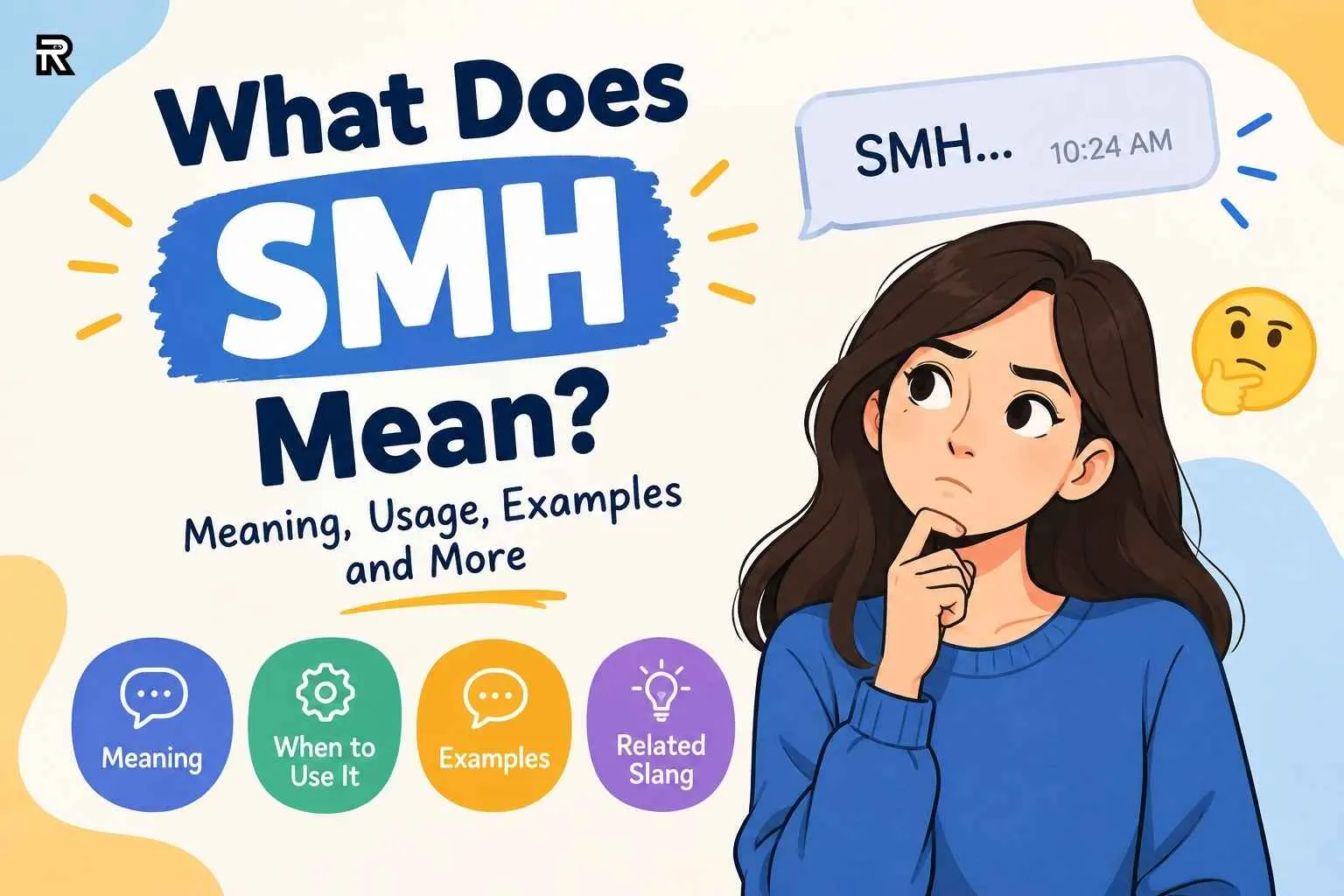
Have you ever received a text that simply says “SMH” and wondered what the other person meant? You’re not alone. This short expression appears in text messages, social media comments, group chats, and everyday online conversations.
SMH stands for “shaking my head.” People use this popular piece of internet slang to express disbelief, disappointment, frustration, annoyance, or disapproval. Depending on the situation, it can also communicate playful teasing or a humorous reaction to someone’s mistake.
For example, if your friend forgets their phone at home for the third time, you might reply, “SMH, you really need to check your pockets before leaving!” The message expresses mild frustration without sounding overly serious.
However, SMH doesn’t always carry the same emotion. A message between close friends might feel funny, while the same abbreviation during a serious disagreement could seem dismissive. Understanding the context makes all the difference.
In this guide, you’ll learn the SMH meaning in text, its full form, how people use it on social media, real message examples, common variations, and how to respond when someone sends you SMH.
What Does SMH Mean in Text?
The most common SMH meaning in text is “shaking my head.” It’s a short, informal expression people use when something seems ridiculous, disappointing, surprising, or frustrating.
The abbreviation represents a physical gesture. Imagine someone telling you they failed an easy test because they forgot to write their name on the paper. You might instinctively shake your head in disbelief. In a text message, SMH communicates that reaction through three letters.
People often use SMH when they don’t need a long explanation. Instead of typing, “I can’t believe you did that,” someone can write “SMH” to convey a similar reaction.
Here are a few common situations where people use it:
- Disbelief: Reacting to something difficult to believe.
- Disappointment: Showing that someone or something let you down.
- Frustration: Responding to a repeated mistake or irritating situation.
- Disapproval: Indicating that someone’s behavior seems unreasonable.
- Humor: Teasing a friend about a silly mistake.
- Sarcasm: Making a critical or ironic comment.
The exact meaning depends on the surrounding conversation. SMH can express mild annoyance without suggesting serious anger, so don’t assume someone is furious just because they use it.
What Does SMH Mean in Texting?
In texting abbreviations, SMH works as a quick reaction to something another person says or does. It can stand alone or appear within a longer sentence.
For example:
Friend: “I stayed up until 3 a.m. watching videos and missed my morning class.”
You: “SMH 😂 You knew you had class today!”
Here, SMH expresses playful disappointment rather than genuine anger. The laughing emoji reinforces the lighthearted tone.
Now consider a different exchange:
Friend: “He promised to help me move, then canceled five minutes before I arrived.”
You: “SMH. That’s really disappointing.”
In this case, SMH communicates disapproval and sympathy with the situation.
These examples show why SMH in text messages is more than a simple abbreviation. It acts as a compact emotional response, allowing people to communicate an attitude without describing every feeling in detail.
What Is the Meaning of SMH in Chat?
The SMH meaning in chat remains the same across most messaging situations: “shaking my head.” However, the tone can change depending on the participants and the subject.
In a group chat, someone might write “SMH” after another person shares an obviously bad idea. In a private message, the same expression might indicate sympathy, frustration, or disbelief.
Consider these examples:
- “You sent the message to the wrong group? SMH.”
- “SMH, they changed the meeting time again.”
- “Bro, you bought the same game twice? SMH 😂”
The first example expresses surprise or disapproval. The second shows frustration. The third is likely playful teasing.
When interpreting SMH in online conversations, pay attention to what happened immediately before the message. Emojis, punctuation, and your relationship with the sender can help you understand the intended tone.
Is SMH an Abbreviation or an Acronym?
SMH is an initialism because its letters represent the first letters of the words “shaking my head,” and people generally pronounce the letters individually.
An abbreviation is a shortened form of a word or phrase. An acronym is commonly pronounced as a word, while an initialism is pronounced letter by letter.
SMH is often casually called an SMH acronym or SMH abbreviation online. Those descriptions are understandable in everyday conversation, but initialism is the more precise linguistic term.
The distinction isn’t essential when you’re texting a friend. Still, it helps explain why people usually write SMH rather than attempting to pronounce it as one word.
What Does SMH Stand For?
SMH stands for “shaking my head.” The phrase describes a physical gesture that people often associate with disbelief, disappointment, disagreement, or frustration.
In digital communication, the written expression represents that gesture even though the other person can’t see your body language.
Imagine watching someone make the same avoidable mistake repeatedly. You might shake your head because you find the behavior frustrating or difficult to understand. Writing SMH creates a similar impression in a conversation.
Here’s a simple breakdown:
| Element | Meaning |
| SMH | The written abbreviation |
| Full form | Shaking my head |
| Type | Informal internet initialism |
| Common purpose | Expressing a reaction or emotion |
| Typical settings | Texts, chats, comments, and social media |
| Formality | Casual and informal |
The abbreviation doesn’t have one fixed emotional meaning. The gesture it represents can communicate several reactions, so the written form depends on context.
Why Do People Use SMH?
People use SMH slang because it provides a quick way to react without writing a complete sentence. In fast-moving conversations, three letters can communicate an attitude that would otherwise require several words.
Common reasons include:
- Saving time: SMH is shorter than writing “I can’t believe that happened.”
- Expressing disbelief: It communicates surprise when something seems unreasonable.
- Showing frustration: It reacts to irritating behavior or repeated mistakes.
- Making a joke: Friends can use it to tease one another without a serious argument.
- Communicating disapproval: It signals that the sender disagrees with someone’s actions.
- Adding emphasis: It can strengthen a reaction when combined with other words.
SMH also functions as a form of digital body language. In face-to-face conversation, your expression, posture, and gestures help others interpret your meaning. Online, those visual cues may be missing, so people use abbreviations, emojis, and punctuation to convey emotional tone.
However, brevity has a downside. A standalone “SMH” doesn’t explain exactly what the sender feels. One person might intend a joke, while another might interpret the same message as criticism.
Does SMH Always Mean Disappointment?
No. Disappointment is a common interpretation, but SMH meaning and tone depend on the situation.
For example, someone might use SMH when a friend makes a ridiculous purchase, when a stranger posts an unbelievable claim, or when a colleague repeatedly changes a deadline.
Each situation creates a different emotional impression.
| Emotion | Example | What SMH communicates |
| Disbelief | “You forgot your passport?” | Surprise |
| Frustration | “The website crashed again. SMH.” | Annoyance |
| Disappointment | “He broke his promise again. SMH.” | Feeling let down |
| Disapproval | “She blamed someone else for her mistake. SMH.” | Criticism |
| Humor | “I walked into the wrong classroom. SMH 😂” | Self-directed embarrassment |
| Sarcasm | “Brilliant idea. SMH.” | Ironic criticism |
The key is to interpret the entire message rather than relying on the abbreviation alone. SMH doesn’t automatically mean anger, hostility, or disrespect.
How to Use SMH in a Sentence
Using SMH is simple once you understand the reaction you want to express. It usually appears at the beginning or end of an informal message, although people sometimes use it in the middle of a sentence.
How to Use SMH in Text Messages
You can use SMH in texting as a complete response or combine it with other words to make your meaning clearer.
Here are three common patterns:
- At the beginning: “SMH, you forgot your keys again.”
- At the end: “I can’t believe they canceled the event. SMH.”
- As a standalone reaction: “SMH 😭”
The first example expresses frustration, while the second conveys disappointment. The third relies on the preceding conversation and emoji to communicate the sender’s feelings.
You don’t need to capitalize every letter. Both “SMH” and “smh” are common in informal communication. Uppercase letters may feel more emphatic to some readers, but capitalization alone doesn’t establish the message’s emotional tone.
How to Use SMH in Casual Conversations
SMH works best when the other person understands your sense of humor and the situation doesn’t require a detailed explanation.
For example:
Friend: “I spent an hour looking for my glasses. They were on my head.”
You: “SMH 😂 How did you not notice?”
This is a natural example of SMH in everyday conversations. You’re teasing your friend about an innocent mistake rather than seriously criticizing them.
You can also use SMH to describe your own behavior:
“I left my lunch on the kitchen counter again. SMH.”
Here, the expression communicates self-directed frustration. It can even make an embarrassing moment feel less serious.
Can You Use SMH in Professional Communication?
Generally, avoid SMH in formal emails, job applications, academic writing, and messages to clients you don’t know well. Because it can communicate disapproval, your recipient might interpret it as disrespectful.
Consider these alternatives:
| Instead of writing | Try writing |
| “SMH, you missed the deadline again.” | “The deadline was missed again. Can we discuss how to prevent this?” |
| “SMH, this report is wrong.” | “I noticed a few issues in the report that need correction.” |
| “SMH, another meeting?” | “Could you clarify the purpose of the additional meeting?” |
In a relaxed workplace group chat, SMH may be acceptable if everyone understands the tone. Still, clear language is usually better when discussing performance, mistakes, deadlines, or disagreements.
SMH Examples in Text Messages
Realistic examples make the SMH definition easier to understand because the abbreviation often communicates an emotion rather than a complete thought.
The following examples show how the same expression can work in different situations.
| Situation | Text message example | Intended meaning |
| Forgetfulness | “You left your wallet at home again. SMH.” | Mild frustration |
| Disbelief | “You paid for a broken phone? SMH.” | Surprise and disbelief |
| Disappointment | “They canceled the trip at the last minute. SMH.” | Feeling let down |
| Repeated mistakes | “We just explained this yesterday. SMH.” | Exasperation |
| Friendly teasing | “You burned instant noodles? SMH 😂” | Playful disbelief |
| Self-criticism | “I studied the wrong chapter. SMH.” | Frustration with yourself |
| Online argument | “He ignored all the evidence. SMH.” | Disapproval |
| Unexpected news | “The concert got canceled two hours before it started. SMH.” | Disappointment |
These are illustrative examples, not quotations from actual conversations. They demonstrate how the surrounding words establish the meaning.
Funny SMH Text Examples
Sometimes, SMH adds humor to an ordinary mistake. Friends may use it to poke fun at each other without intending to cause offense.
Here are a few examples:
- “You microwaved your ice cream to make it colder? SMH 😂”
- “Bro wore two different shoes to school. SMH.”
- “I opened the fridge three times hoping new food would appear. SMH 😭”
- “You forgot your password five minutes after changing it? SMH.”
These examples work because the situations are silly or relatable. The expression adds a playful reaction, while the exaggerated situations make the humor clear.
However, humor depends on the relationship. A joke that feels harmless between close friends might sound insulting to someone who doesn’t know you well.
SMH in a Realistic Chat Conversation
Here’s how SMH might appear in a casual exchange between friends.
Alex: “I went to the store and forgot the one thing I needed.”
Jordan: “SMH 😂 What did you go there for?”
Alex: “Milk.”
Jordan: “And you came home with snacks instead?”
Alex: “Exactly.”
In this exchange, SMH expresses amusement and mild disbelief. Jordan isn’t seriously angry; the laughing emoji and follow-up question make the playful tone clear.
Now imagine the same abbreviation after someone breaks an important promise. Without a joking context, SMH could communicate genuine disappointment.
The lesson: Read the whole conversation before deciding what SMH means.
What Does SMH Mean on Social Media?
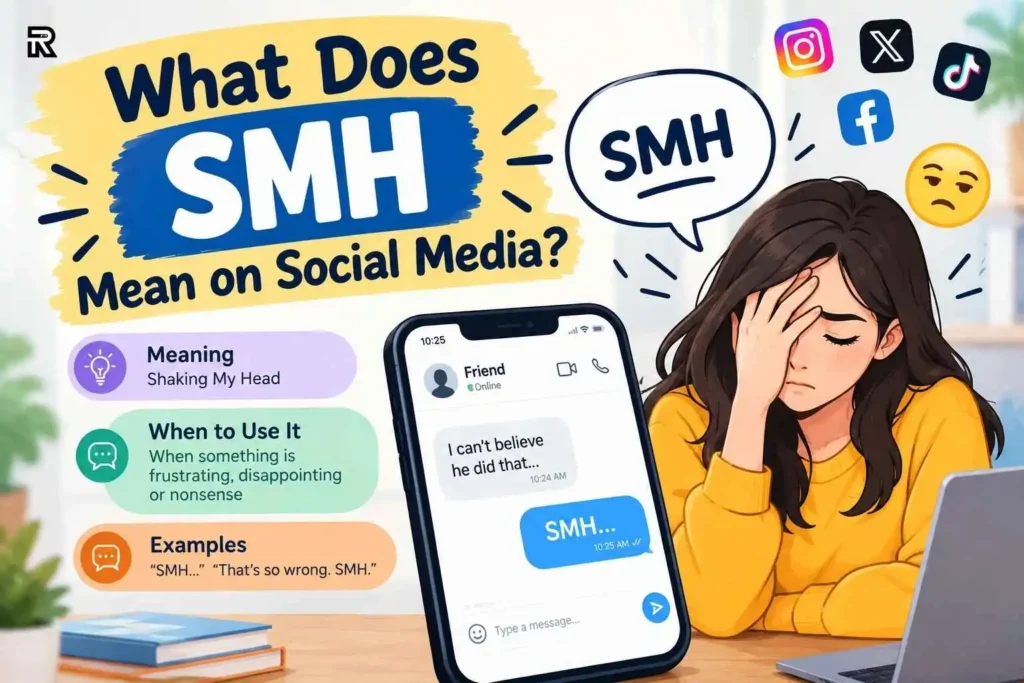
The SMH meaning in social media is generally consistent with its meaning in private texts. People use it to react to posts, videos, comments, news, and behavior they find disappointing, ridiculous, or difficult to believe.
Its purpose doesn’t fundamentally change between platforms. What changes is the content people react to and the tone they use.
SMH on Instagram
On Instagram, people may write SMH in comments, captions, or direct messages. It can react to an unbelievable story, a frustrating situation, or a friend’s funny mistake.
Examples include:
- “SMH, people really believe everything they read online.”
- “You posted that picture without checking the background? SMH 😂”
- “SMH at this comment section.”
The first example expresses disapproval, while the second is likely playful. The third reacts to something in the discussion.
When interpreting SMH on Instagram, consider the original post, the relationship between the people involved, and any accompanying emojis.
SMH on TikTok
People may use SMH on TikTok when commenting on an unexpected video, a questionable decision, or a frustrating situation.
For example:
- “SMH, why would anyone do that?”
- “The ending made no sense. SMH.”
- “SMH at the way he handled that situation.”
The abbreviation can express criticism, disbelief, or disappointment. It doesn’t automatically mean the commenter dislikes the creator; sometimes the reaction targets one particular action or moment.
TikTok comments can move quickly, so short expressions such as SMH help people respond without writing a lengthy explanation.
SMH on WhatsApp
SMH on WhatsApp commonly appears in individual messages, family groups, and conversations with friends. Its meaning is the same as in other messaging apps.
For example:
Friend: “I left my phone in a taxi.”
You: “SMH. Did you call the driver?”
Friend: “Yes, thankfully he found it.”
Here, SMH expresses an initial reaction to the mistake. Your follow-up question then shifts the conversation toward solving the problem.
WhatsApp conversations often include shared history and personal context. That context can make a brief message easier to understand, but it doesn’t guarantee that the sender’s tone will always be obvious.
SMH in Memes and Online Comments
Memes often portray situations that seem absurd, embarrassing, or frustrating. SMH works well in these settings because it communicates a recognizable reaction in just three letters.
You might see it used alongside:
- A picture of someone making an avoidable mistake.
- A reaction GIF showing a person shaking their head.
- A comment criticizing an unreasonable decision.
- A joke about an everyday inconvenience.
- A post describing a frustrating experience.
This is an example of digital body language: written words and visual elements work together to convey an emotional reaction that might otherwise be communicated through facial expressions or gestures.
For further examples of established internet slang, see Dictionary.com’s explanation of SMH.
Is SMH Rude or Disrespectful?
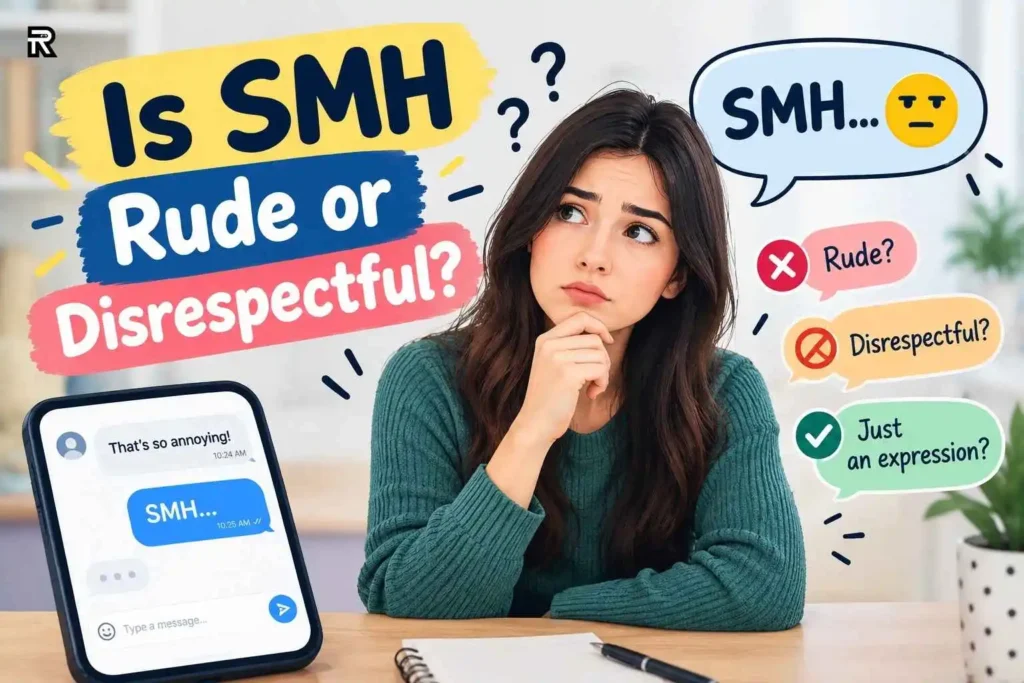
SMH isn’t inherently rude, but it can sound dismissive because it often communicates disapproval. Whether it feels harmless or disrespectful depends on the situation, the relationship, and the surrounding message.
For example, sending SMH to a close friend who made a silly mistake may be perfectly normal. Sending the same expression to someone who has shared a serious personal problem might make them feel judged.
When SMH Sounds Harmless
SMH is more likely to feel playful when:
- You’re chatting with close friends who understand your humor.
- The situation involves a minor, harmless mistake.
- Both people regularly use informal slang.
- The message includes enough context to show that you’re joking.
- The reaction is directed at your own mistake rather than someone else’s vulnerability.
For instance, “I put my shirt on backward. SMH 😂” is a lighthearted way to laugh at yourself.
When SMH Can Sound Rude
SMH may come across as disrespectful when:
- You use it to mock someone’s genuine mistake.
- The recipient is already upset or embarrassed.
- You’re responding to a serious concern without offering support.
- You use it during a tense disagreement.
- You send it without context after someone asks an important question.
Imagine a friend telling you they’ve had a difficult day. Replying only “SMH” could leave them wondering whether you’re disappointed in them or simply don’t care.
In these situations, a direct and thoughtful response is usually better.
How to Make SMH Sound Less Harsh
If you want to use SMH without sounding overly critical, make your intention clear.
For example:
- “SMH 😂 We both forgot the appointment!”
- “SMH, that’s frustrating. I hope they fix it soon.”
- “I made the same mistake last week. SMH at myself.”
These messages provide context and help the recipient understand your reaction.
Remember that an emoji can soften a message, but it doesn’t automatically make every comment friendly. The words still matter.
How to Respond to SMH
If someone sends you SMH, don’t assume they’re angry. First, consider what you said before the abbreviation appeared. Their response may express disappointment, disbelief, humor, or mild frustration.
Your reply should match the situation rather than treating every SMH message as an argument.
Funny Replies to SMH
If a friend is teasing you, a playful response can keep the conversation light.
Here are some examples:
- “What did I do this time? 😂”
- “I know, I know. My bad!”
- “Don’t judge me yet!”
- “Let me make one mistake in peace. 😭”
- “SMH right back at you!”
These replies work best when both people understand the joke. Avoid using them when the other person is genuinely upset.
Respectful Responses to SMH
If the sender seems disappointed or frustrated, acknowledge the situation instead of immediately making a joke.
You could reply with:
- “I understand why that was frustrating.”
- “You’re right. I should’ve handled that better.”
- “Can you explain what bothered you?”
- “I didn’t mean it that way. Let me clarify.”
- “I see your point. I’ll try to avoid that next time.”
These responses can help prevent a small misunderstanding from turning into a bigger disagreement.
How to Respond When You Don’t Understand SMH
Sometimes, the sender’s meaning isn’t clear. Rather than guessing, ask a simple question.
For example:
Friend: “SMH.”
You: “What do you mean by that?”
Or you could write, “Are you joking, or did something bother you?”
Asking for clarification is especially useful when a message seems unusually short or appears during a serious conversation. It helps you understand the intended tone without jumping to conclusions.
SMH vs. Other Texting Abbreviations
SMH belongs to a much larger group of internet slang and texting abbreviations. Some expressions communicate laughter, others show surprise, and a few convey frustration or disbelief.
Understanding these differences helps you choose the right expression for a particular conversation.
| Expression | Full form or meaning | Typical use |
| SMH | Shaking my head | Disbelief, disappointment, or disapproval |
| LOL | Laughing out loud | Amusement or laughter |
| OMG | Oh my God | Surprise, excitement, or shock |
| WTF | What the… | Strong surprise, confusion, or frustration |
| FR | For real | Agreement, emphasis, or questioning sincerity |
| Facepalm | Covering the face with a hand | Embarrassment or frustration |
| Sigh | An audible or written expression of exasperation | Resignation, disappointment, or relief |
These expressions can overlap. Someone might find a situation both funny and ridiculous, so they could use LOL and SMH in the same message.
SMH vs. LOL
The difference between SMH vs. LOL is the reaction each expression usually communicates.
SMH commonly signals disbelief, frustration, or disapproval. LOL usually signals laughter or amusement, although people sometimes use it to soften an awkward message.
Compare these examples:
- “You forgot your own birthday? SMH.” — Disbelief.
- “You forgot your own birthday? LOL.” — Amusement.
- “You forgot your own birthday? SMH 😂” — Disbelief mixed with humor.
As the examples show, an expression’s meaning can shift when you combine it with other words or emojis.
SMH vs. OMG
SMH vs. OMG is mainly a difference between disapproval and surprise.
OMG means “oh my God.” People use it when something shocks, excites, surprises, or overwhelms them.
For example:
- “OMG, I won the competition!” expresses excitement.
- “SMH, he forgot the competition was today.” expresses disbelief or disapproval.
The expressions aren’t interchangeable in every situation. Choose OMG when you want to emphasize a strong reaction to an event and SMH when you want to convey a head-shaking response.
SMH vs. Facepalm
SMH and facepalm can express similar emotions, but they describe different gestures.
SMH represents shaking your head. Facepalm refers to covering your face with your hand, often because of embarrassment, frustration, or disbelief.
For example:
- “I sent the email without attaching the file. SMH.”
- “I sent the email without attaching the file. Facepalm.”
Both messages acknowledge a mistake. The first emphasizes a head-shaking reaction, while the second evokes the gesture of covering your face.
The facepalm emoji (🤦) can also accompany SMH to make the reaction more visual.
SMH vs. WTF
WTF is a stronger and potentially profane expression commonly expanded as “what the f***.” People use it to express shock, confusion, disbelief, or frustration.
SMH is often milder, although it can still sound judgmental.
Compare:
- “SMH, why would they cancel without telling anyone?”
- “WTF? Why would they cancel without telling anyone?”
The first often conveys disappointment or disapproval. The second can sound more forceful or confrontational.
Because WTF contains profanity in its usual expansion, SMH is generally the safer choice in conversations where you want to avoid explicit language.
Common SMH Variations and Related Phrases
People often combine SMH with other expressions to add emphasis, humor, or a more specific tone. These combinations usually retain the original meaning of shaking my head.
However, not every variation has a separate, universally established definition. Context remains important.
What Does SMH FR Mean?
FR usually stands for “for real.” People use it to emphasize sincerity, express agreement, or react strongly to something they find unbelievable.
When someone writes SMH FR, they’re generally emphasizing disbelief, frustration, or disapproval.
Example:
“ He canceled our plans again, SMH FR.”
A more natural version without the extra space is: “He canceled our plans again. SMH FR.”
The combination emphasizes that the sender finds the situation genuinely frustrating. Depending on the conversation, it may also communicate agreement with someone else’s criticism.
What Does SMH LOL Mean?
SMH LOL combines shaking-my-head disapproval or disbelief with laughter.
For example:
“You tried to unlock your front door with your car key? SMH LOL.”
The sender finds the mistake ridiculous but funny. The laughter makes the reaction less serious than a plain SMH might sound.
People sometimes use LOL to soften criticism, although it doesn’t guarantee that the recipient will interpret the message as friendly.
What Does SMH My Head Mean?
“SMH my head” is a deliberately redundant internet expression.
SMH already stands for “shaking my head,” so adding “my head” repeats part of the meaning. Taken literally, the phrase becomes “shaking my head my head.”
People often use this wording humorously, sometimes to exaggerate a reaction or poke fun at internet slang itself.
Example:
“You forgot your password immediately after resetting it. SMH my head.”
Although redundant, the phrase is recognizable in informal online communication. The standard full form remains “shaking my head.”
Other Common SMH Expressions
Here are a few additional variations and how people might use them.
| Expression | Example | Intended tone |
| SMH at this point | “SMH at this point. Nothing is working.” | Exasperation |
| SMH bro | “SMH bro, you knew the rules.” | Disapproval or teasing |
| SMH again | “You missed the bus again. SMH.” | Frustration |
| SMH seriously | “SMH, seriously? You did that twice?” | Disbelief |
| Big SMH moment | “Forgetting your own luggage was a big SMH moment.” | A notably ridiculous mistake |
These are flexible phrases rather than strict formulas. You don’t need to memorize them all to understand SMH or use it naturally.
When Should You Avoid Using SMH?
Although SMH is common in casual conversations, some situations call for clearer language. The abbreviation can communicate judgment without explaining what the sender actually means.
Knowing when to avoid it can help you prevent unnecessary misunderstandings.
Avoid SMH in Formal Emails
In formal communication, abbreviations can make a message seem too casual or dismissive. This matters when you’re writing to a manager, teacher, customer, or someone you don’t know well.
Instead of writing “SMH, this report is wrong,” explain the problem directly.
For example:
“I noticed a few issues in the report. Could we review the figures before submitting it?”
This wording identifies a concern without insulting the person who prepared the report.
Avoid SMH When Someone Needs Support
If someone shares a personal problem, an embarrassing experience, or a serious mistake, SMH might sound like criticism rather than understanding.
Imagine a friend explaining that they failed an important exam. Responding with SMH could make them feel worse.
A more supportive message might be:
“I’m sorry that happened. Do you want to talk about it?”
The goal isn’t to avoid every negative reaction. It’s to choose wording that fits the person’s needs and the seriousness of the situation.
Use Clearer Alternatives When Necessary
If SMH feels too vague, choose words that express your actual reaction.
- For disappointment: “That’s disappointing.”
- For disbelief: “I can’t believe that happened.”
- For frustration: “That’s really frustrating.”
- For confusion: “I’m not sure I understand.”
- For disapproval: “I don’t think that was the right decision.”
- For sympathy: “I’m sorry you’re dealing with that.”
Clear language is particularly useful when the subject matters or when you want to resolve a disagreement.
Where Did SMH Come From?
SMH developed as part of the broader growth of internet slang and digital communication. Its exact inventor and precise origin date aren’t established, so it’s better to avoid attributing the expression to one person.
According to Dictionary.com, SMH emerged in online and text communication during the 2000s. The publication notes that the expression appeared on Urban Dictionary in 2004 and spread on Twitter by 2007.
The underlying gesture, shaking your head to express disbelief or disapproval, existed long before texting. The abbreviation simply gave people a quick way to represent that reaction in written conversations.
As messaging and social media grew, SMH became familiar in comments, private messages, online discussions, and reaction posts.
Is SMH Still Popular?
SMH remains a recognizable expression in online communication, although its popularity can vary across platforms, communities, and age groups. There isn’t enough evidence here to assign it a reliable current usage percentage or declare it the most popular texting abbreviation.
Its continued presence in dictionaries and online discussions shows that the expression remains part of established internet slang. You may also encounter related expressions such as SMDH, which generally means “shaking my damn head” and conveys stronger frustration.
Frequently Asked Questions About SMH
What Does SMH Mean in a Text Message?
SMH stands for “shaking my head.” People use it in text messages to express disbelief, disappointment, frustration, or disapproval. It can also communicate playful teasing between friends.
Is SMH Rude?
Not necessarily. SMH can be harmless when friends joke with each other, but it may sound dismissive during a serious conversation. The surrounding message and relationship help determine its tone.
Does SMH Mean Anger?
No. SMH can express frustration or annoyance, but it doesn’t automatically mean anger. It may simply communicate surprise, disappointment, or disbelief.
Can SMH Be Funny?
Yes. People often use SMH to react humorously to silly mistakes or ridiculous situations. Emojis and playful wording can make the intended humor clearer.
What Is the Opposite of SMH?
There isn’t one universally accepted opposite of SMH. Depending on the context, expressions such as “well done,” “I agree,” or “that’s impressive” may communicate a contrasting reaction.
Can You Use SMH in Professional Emails?
It’s generally better to avoid SMH in formal emails because it can sound dismissive or unprofessional. Use direct wording to explain your concern or reaction instead.
What Does SMH Mean Between Friends?
Between friends, SMH often expresses playful disbelief, mild frustration, or disappointment. It can also be a way to tease someone about a harmless mistake.
What Does SMH Mean on Instagram, TikTok, and WhatsApp?
The basic meaning stays the same across these platforms: “shaking my head.” People use it in comments, captions, direct messages, and group chats to react to something surprising, frustrating, or ridiculous.
What Does SMH FR Mean?
SMH FR combines “shaking my head” with FR, which stands for “for real.” Together, the expressions emphasize genuine disbelief, frustration, or agreement with a reaction.
What Does SMH LOL Mean?
SMH LOL combines a head-shaking reaction with laughter. It often communicates that something is ridiculous or disappointing but also funny.
What Does SMH My Head Mean?
“SMH my head” is a humorous, redundant expression. Because SMH already means “shaking my head,” adding “my head” repeats part of the phrase.
What Is the Difference Between SMH and Facepalm?
SMH represents shaking your head in disbelief or disapproval. Facepalm refers to covering your face with your hand, usually to express embarrassment, frustration, or disbelief. Both can communicate similar emotions.
Conclusion
SMH means “shaking my head,” and people commonly use it in texts, chats, and social media to express disbelief, disappointment, frustration, or disapproval. It can also add humor to conversations between friends.
The most important thing to remember is that context determines the tone. A quick SMH might be a playful joke in one conversation and a sign of genuine disappointment in another. When the situation is serious or the meaning isn’t clear, a direct response is often the better choice.

Edward Whitmore is a British author, researcher, and public speaker with a strong interest in language, philosophy, and lifelong learning. Born in York, England, he discovered his love for books and linguistics during his school years and later turned that passion into a successful writing career. His books focus on helping readers understand the deeper meaning of words, ideas, and communication through clear explanations and well-researched content. Edward regularly contributes to educational projects and enjoys sharing his knowledge through workshops and articles. In his free time, he visits historical landmarks, collects vintage books, and studies the development of the English language.
Books:
- Beyond the Dictionary
- The Meaning Behind Every Word
 Oliver Harrington
 Charlotte Pembroke