
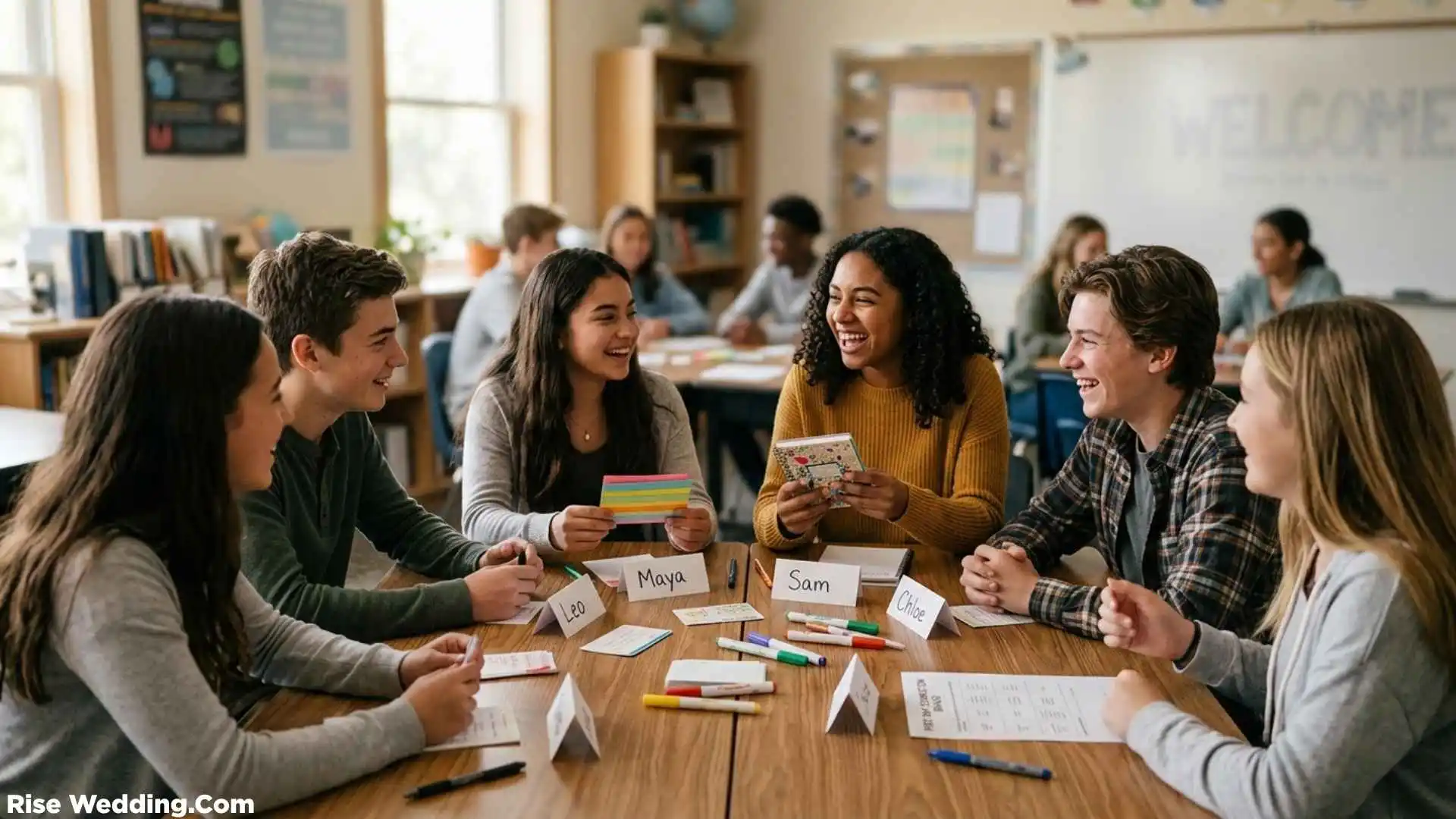
The first day of school can be exciting, but it can also bring nervousness, awkward silence, and students who do not know anyone around them. First day of school icebreakers give teachers an easy way to start conversations, learn names, encourage participation, and create a welcoming classroom without making students feel like they are being put on stage.
The best activities are not necessarily the loudest or funniest. They are low-pressure, age-appropriate, inclusive, easy to explain, and connected to the classroom goal. In this guide, you’ll find ideas for elementary, middle, and high school students, plus activities for shy students, large classes, teachers with no preparation time, and classrooms that want to combine icebreakers with meaningful learning.
What Are the First Day of School Icebreakers?
First day of school icebreakers are short questions, games, partner activities, or group challenges designed to help students become more comfortable with their classmates and teacher.
They can be used during the first few minutes of class or as part of a longer community-building activity. Common examples include Would You Rather, Two Truths and a Lie, Find Someone Who, Human Bingo, Name and Action, Four Corners, partner interviews, and collaborative challenges.
The purpose is not simply to fill time. A well-designed activity can give students a structured reason to talk, listen, cooperate, and discover common interests.
The University of Iowa’s Center for Teaching describes icebreakers as questions or activities that can be adapted to different classroom goals. Its guidance also emphasizes low-stakes prompts, inclusive participation, appropriate timing, and flexibility in how students respond.
Quick Answer
The best first day of school icebreakers are simple, welcoming activities that help students interact without unnecessary pressure. Choose the activity based on students’ ages, class size, available time, and your goal.
For younger students, try movement, drawing, or imagination games. For middle and high school students, use funny questions, partner challenges, opinion-based activities, and collaborative problem-solving. For shy students, start with writing, pairs, or small groups rather than immediate whole-class presentations.
Key Takeaways
- Keep instructions short and clear.
- Start with low-risk questions.
- Avoid forcing students to reveal private information.
- Match the activity to the students’ age.
- Use pairs or small groups when students are nervous.
- Choose movement activities for energetic groups.
- Use team challenges when collaboration is the goal.
- Give students different ways to participate when practical.
- Connect the activity to your subject when it makes sense.
- Keep enough time for important first-day routines and instruction.
Why Are Icebreakers Useful on the First Day of School?

A first-day activity can influence how comfortable students feel interacting with classmates and participating in the classroom.
The University of Iowa notes that opening activities can provide low-stakes opportunities for conversation, listening, and community building. It also recommends connecting icebreakers to the goals and timing of the class instead of treating them as an activity that exists separately from learning.
They Help Students Start Conversations
A classroom full of strangers can become quiet quickly.
Instead of saying, “Talk to someone,” give students a specific prompt:
“Find a partner and discover one hobby you both enjoy.”
Now students have a clear starting point.
They Help Students Learn Names
Names are one of the simplest ways to create familiarity.
Name games give students repeated opportunities to hear and say names. Teachers can also use partner introductions to help students learn about classmates without requiring everyone to give a long speech.
They Can Reduce First-Day Awkwardness
Students may worry about saying the wrong thing, especially when they are new to a school or class.
Low-pressure activities provide a shared task. Students are no longer expected to invent a conversation from nothing.
Recent 2026 guidance from Edutopia similarly emphasizes simple, low-stakes activities that shift attention away from performance and toward participation and connection.
They Support Classroom Community
Icebreakers work best when they are part of a broader effort to build relationships.
A classroom community develops through repeated interactions, not through one game on the first day. Collaborative activities, respectful discussions, and consistent routines can continue that process throughout the year.
Funny Icebreakers for Teens
Funny icebreakers for teens should be entertaining without making students feel embarrassed or forced to share personal information. Teenagers usually respond well to activities that involve humor, imagination, quick choices, and friendly competition.
Try “Would You Rather?” with funny but school-appropriate choices, such as having the ability to pause time or rewind five minutes. Another option is “Two Truths and a Lie,” where students share three statements and classmates guess which one is false.
For a more energetic activity, give students a silly scenario and ask them to create the funniest solution in small groups. These activities can help teenagers start talking naturally while keeping the classroom atmosphere relaxed.
First Day of School Icebreakers Middle School
The first day of school icebreakers for middle school should help students learn names, discover common interests, and feel comfortable in a new classroom. Since middle school students can be sensitive about being singled out, activities should allow participation without excessive pressure.
“Find Someone Who” is a useful choice. Give students prompts such as “find someone who has a pet,” “find someone who enjoys drawing,” or “find someone who has visited another state or country.” Students walk around the room and talk to classmates to complete the list.
Another option is a classroom question circle. Each student answers a simple question, such as their favorite food, hobby, or school subject. Keep the first-day questions light and avoid anything too personal.
First Day of School Icebreakers First Grade
The first day of school icebreakers for first grade should be short, visual, and easy to understand. Young children may feel nervous about a new classroom, so the first activity should help them feel safe and welcomed.
“Name and Action” is a simple game. Each child says their name and performs an easy movement, such as clapping, waving, or jumping once. The class repeats the name and movement together.
Teachers can also use a picture-based choice game. Show two pictures, such as a cat and a dog, and let children choose their favorite. This gives young students a simple way to participate even if they are not ready to speak at length.
First Day of School Icebreakers 2nd Grade
First day of school icebreakers for 2nd grade can involve simple questions, movement, drawing, and partner activities. At this age, children can usually follow slightly more detailed instructions while still benefiting from short, active games.
Try “Classmate Bingo” with age-appropriate prompts such as someone who likes the same color, has a pet, enjoys reading, or likes a particular sport. Students talk to classmates and try to complete several squares.
Another idea is “My Favorite Things.” Give each child a small worksheet with categories such as favorite food, animal, game, and color. Students complete it and then share selected answers with a partner.
First Day of School Icebreakers 3rd Grade
First day of school icebreakers for 3rd grade can introduce students to one another while also encouraging communication and creativity. A good activity should be structured enough to keep the class organized but playful enough to feel different from a normal lesson.
“Three Clues About Me” works well. Each student writes or says three clues about themselves, and classmates try to guess who they are.
Teachers can also organize a quick classroom scavenger hunt. Students find classmates who match simple descriptions, such as someone who likes the same sport or has the same favorite color. This helps students interact with several classmates instead of only talking to their closest friends.
First Day of School Icebreakers 3rd Grade
For another third-grade option, try “Would You Rather?” Use fun choices that children can answer quickly, such as flying or becoming invisible, living underwater or in space, or having a pet dinosaur or dragon.
Students can show their answer by moving to different areas of the classroom, raising a hand, or holding up a choice card. After each question, invite a few students to explain their choice.
This type of activity gives children an opportunity to speak while also showing that classmates can have different opinions.
First Day of School Icebreakers 4th Grade
First day of school icebreakers for 4th grade can be slightly more challenging because students are ready for longer conversations and simple teamwork. Pair activities and small-group challenges work particularly well.
Try “Common Ground.” Put students into groups of three or four and ask them to discover three things everyone in the group has in common. They might share a favorite sport, food, hobby, or type of book.
Another activity is “Mystery Fact.” Students anonymously submit one interesting fact about themselves. The teacher reads the facts aloud, and classmates guess who wrote each one.
First Day of School Icebreakers 5th Grade
First day of school icebreakers for 5th grade should feel age-appropriate and avoid activities that students may consider too childish. Humor, teamwork, and interesting questions can make the first day more engaging.
“Two Truths and a Lie” is a good choice because students can share interesting facts while classmates try to identify the lie. Encourage students to keep their statements school-appropriate.
For teamwork, give small groups a quick challenge such as designing an imaginary invention that could make school easier. Teams have a few minutes to create their idea and give a short presentation.
First Day of School Icebreakers 6th Grade
First day of school icebreakers for 6th grade can help students adjust to a new environment while encouraging them to interact with classmates. Since sixth graders may come from different elementary schools, activities that mix students are particularly useful.
“Common Interests” is an easy starting point. Put students into small groups and ask them to identify hobbies, favorite activities, or interests they share.
Another idea is “Question Swap.” Each student writes a fun, school-appropriate question on a card. Students exchange cards and answer the question they receive. This gives everyone a conversation starter without requiring students to invent questions on the spot.
First Day of School Icebreakers Kindergarten
First day of school icebreakers for kindergarten should focus on comfort, movement, names, and simple classroom routines. Young children may have little experience with group activities, so instructions should be demonstrated rather than simply explained.
A teacher can begin with a name-and-motion game. Each child says their name while making an easy movement, and the rest of the class repeats it.
“Color Hunt” is another simple option. Call out a color and ask children to look around the classroom for something that matches it. The activity combines movement with an easy way to get children comfortable in their new environment.
First Day of School Icebreakers Social Distancing
First day of school icebreakers with social distancing in mind should avoid unnecessary physical contact, sharing objects, or activities that require students to stand close together. Teachers can still create interaction through verbal games, individual materials, and movement within designated spaces.
Try “Classroom Corners,” where each area of the room represents an answer. Ask questions such as “Which do you prefer: cats or dogs?” Students move to their chosen area while maintaining the required distance.
For younger students, teachers can use individual cards, whiteboards, or hand signals to let everyone participate at the same time. This keeps the activity interactive while allowing appropriate space between students.
First Day of School Icebreakers Virtual
The first day of school icebreakers for virtual classes should be simple enough for students to participate through a video platform. Younger students may need help from an adult, while older students can usually use chat, reactions, polls, or breakout rooms.
A virtual “Show and Tell” can work well. Ask students to bring one ordinary object from their study area and explain why they chose it. Keep the sharing time short so every student has an opportunity to participate.
Another option is “Virtual This or That.” The teacher gives two choices, and students respond using hand signals, chat, reactions, or an online poll. This creates interaction without requiring students to leave their screens.
How to Choose the Right First Day Icebreaker
There is no single activity that works for every classroom. The right choice depends on who is in the room and what you want students to accomplish.
Match the Activity to Your Goal
| Your Goal | Good Choices |
| Learn names | Name and Action, Name Toss |
| Encourage conversation | Partner Questions, Common Ground |
| Get students moving | Four Corners, Move If… |
| Help shy students | Write-Pair-Share, Drawing Prompt |
| Build teamwork | Paper Tower, Group Challenge |
| Energize a large class | Human Bingo, Question Stations |
| Add humor | Would You Rather, Silly Superpowers |
| Introduce your subject | Subject-Based Questions |
| Build classroom norms | Community Agreement Challenge |
Think about the outcome before choosing the game. If you want students to learn names, a complicated team competition may not be the best choice.
Consider Age and Maturity
A game that delights a six-year-old may feel childish to a 16-year-old.
Elementary students often enjoy imagination, movement, drawing, simple challenges, and playful questions.
Middle school students may prefer humor, choices, competition, and activities that allow them to talk without making long presentations.
High school students often respond better to thoughtful questions, practical challenges, opinions, and activities that respect their independence.
Consider Class Size
A whole-class activity can become slow when 30 or 40 students have to answer one question individually.
For large classes, consider:
- Pairs
- Groups of three or four
- Stations
- Team challenges
- Four Corners
- Human Bingo
- Simultaneous voting
Edutopia also describes learning stations as a way to add movement, break up routines, and help students interact during the opening days of school.
50+ First Day of School Icebreakers
The following activities cover different ages, personalities, classroom sizes, and teaching goals.
Quick First Day Icebreakers
1. Name and Action
Each student says their name while performing a simple movement.
For example:
“I’m Alex,” followed by a wave.
The group repeats the name and movement.
This is especially useful with younger students because the movement creates another memory cue.
2. This or That
Give students two choices:
- Dogs or cats?
- Summer or winter?
- Books or movies?
- Sweet or salty?
- Morning or night?
Students raise their hands, move to a side of the room, or discuss their choice with a partner.
3. One-Word Introduction
Ask each student to choose one word connected to something they enjoy.
Examples include:
- Soccer
- Music
- Art
- Reading
- Cooking
- Gaming
Students can explain their choice to a partner.
4. Question of the Day
Write an interesting question on the board.
For example:
“If you could instantly become great at one skill, what would it be?”
Give students time to think before asking them to discuss their answers.
5. Find Someone Who…
Create prompts such as:
- Likes drawing
- Plays a sport
- Enjoys reading
- Likes science
- Has a favorite animal
Students walk around and find classmates who match the descriptions.
6. Common Ground
Put students into groups of three or four.
Give them several minutes to discover things everyone has in common.
Encourage specific connections instead of obvious answers such as “We are all students.”
7. Partner Interview
Give students three questions to ask one another.
For example:
- What is something you enjoy?
- What is something you would like to learn?
- What is one thing you are looking forward to this year?
Partners can introduce each other afterward if they are comfortable.
First Day Icebreakers for Elementary Students
Young students often benefit from activities that combine conversation with creativity or movement.
8. Animal Introductions
Students say their name and choose an animal they like.
They can imitate the animal if they want.
9. Mystery Drawing
Ask students to draw something that represents them.
It could be:
- A favorite food
- A hobby
- An animal
- A sport
- A favorite activity
Partners guess what the drawing represents.
10. Silly Superpower
Ask:
“What completely useless superpower would you like?”
Possible answers:
- Finding missing pencils
- Knowing where lost socks are
- Making vegetables taste like candy
- Always finding the classroom eraser
11. Classroom Treasure Hunt
Ask students to find classroom objects based on clues.
Examples:
- Something blue
- Something round
- Something used for writing
- A book with an animal on the cover
12. One-Word Story
Start a story with one word.
Each student adds another word.
The result can become wonderfully strange.
13. Dream Classroom Drawing
Ask students to draw one thing they would love to have in their classroom.
They can explain their drawing to a partner.
14. Favorite Animal Groups
Students choose an animal.
Those who choose the same animal form a group and share why they selected it.
15. Color Connection
Give students several color choices.
Ask them to choose a color representing their current mood, favorite activity, or personality.
Students then compare their choices with a partner.
First Day Icebreakers for Middle School
Middle school students often appreciate humor and activities that give them some control over what they share.
16. Would You Rather?
Try questions such as:
- Would you rather fly or become invisible?
- Would you rather explore space or the deep ocean?
- Would you rather have super speed or super strength?
- Would you rather live in a treehouse or on a boat?
The goal is not the “correct” answer. Students explain their reasoning.
17. Two Truths and a Lie
Each student creates three statements about themselves.
Two are true and one is false.
Others guess the false statement.
Allow students to use harmless facts rather than personal information.
The University of Iowa includes Two Truths and a Lie among its example activities and notes that it can be adapted for smaller groups depending on class size.
18. Common Ground Challenge
Groups have several minutes to discover unusual things they share.
For example:
“We all prefer action movies.”
is less interesting than:
“We all learned to ride a bicycle before age eight.”
19. Mystery Object
Place an ordinary object in a bag.
Students ask yes-or-no questions until they identify it.
20. Ranking Challenge
Give groups five fictional choices.
For example:
“Rank these superpowers from most useful to least useful.”
The group must discuss the options and agree on a final order.
21. Three Things in Common
Pair students who do not know each other well.
They have two minutes to find three things they both enjoy.
22. Silent Line-Up
Ask students to arrange themselves without talking.
Try:
- Birth month
- First-name alphabetical order
- Favorite season
Afterward, discuss how they communicated without words.
Silent line-ups are also included among the University of Iowa’s suggested community-building activities.
First Day Icebreakers for High School Students
Older students often prefer activities that feel relevant rather than overly childish.
23. Unpopular Opinion
Choose harmless topics such as:
- Best pizza topping
- Best school lunch
- Most overrated movie genre
- Best weekend activity
Students explain their opinions respectfully.
24. One-Minute Pitch
Give students a silly product.
Their task is to convince classmates that the product is useful.
Example:
“Convince everyone that a backpack with a built-in snack drawer is necessary.”
25. Future Invention
Students invent something that solves an everyday problem.
They decide:
- Product name
- Problem
- Solution
- Target user
- Short advertisement
This can also become a bridge into a writing, business, design, or technology lesson.
26. Ideal School Day
Ask:
“If you could redesign one normal school day, what would it look like?”
Students can discuss schedules, subjects, breaks, activities, and learning spaces.
27. Mystery Question
Use questions that encourage thought without requiring personal disclosure.
Examples:
- What invention would improve everyday life?
- What skill should every student learn?
- What fictional world would you visit?
- What would you change about a classroom?
28. School Improvement Challenge
Small groups identify one realistic problem at school and propose a solution.
They explain:
- The problem
- Their idea
- Who benefits
- What could make implementation difficult
This turns an icebreaker into a practical problem-solving activity.
No-Prep First Day Icebreakers
Sometimes the bell rings and you have only a few minutes. These activities need little or no material.
29. Twenty Questions
Think of an animal, object, person, place, or fictional character.
Students ask yes-or-no questions until they solve it.
30. Mirror Me
Students work in pairs.
One person makes slow movements while the other copies them.
Then they switch.
31. Clap Pattern
Create a simple rhythm.
Students copy it.
Volunteers can create new patterns for the class.
32. Move If…
Say:
“Move if you enjoy drawing.”
“Move if you like sports.”
“Move if you prefer summer.”
Students can also respond from their seats if movement is not appropriate.
33. Category Countdown
Choose a category such as:
- Fruits
- Animals
- Sports
- Colors
- Movies
Students name examples within a short time.
34. Quick Partner Question
Give students one question and two minutes.
Try:
“What is something you would like to learn this year?”
35. Would You Rather Vote
Read a question and let students vote by raising their hands or moving to different areas.
It requires almost no preparation.
First Day Icebreakers for Shy Students
A good classroom activity should not assume that everyone enjoys public speaking.
36. Write First, Share Later
Give students a minute to write their response.
Then ask them to share with one partner.
This gives them time to organize their thoughts.
37. Drawing Response
Students draw their answer instead of saying it aloud.
This works especially well with younger learners.
38. Choice Cards
Provide several answers.
Students hold up a card instead of speaking.
39. Partner Introduction
Students learn one comfortable fact about their partner.
Volunteers can introduce their partner to the class.
40. Anonymous Answers
Students write answers without names.
The teacher reads selected responses aloud.
41. Emoji Check-In
Students choose an emoji or symbol that represents their current energy.
They can explain it if they want, but they do not have to.
The University of Iowa recommends flexibility in how students respond and warns that some seemingly simple “favorite” questions can put students on the spot.
First Day Icebreakers for Large Classes

Large groups need activities that prevent students from waiting through dozens of individual introductions.
42. Human Bingo
Create squares containing statements such as:
- Likes drawing
- Plays a sport
- Enjoys reading
- Likes science
- Has a pet
Students find classmates who match the descriptions.
43. Four Corners
Assign an answer to each corner.
For example:
Flying | Teleportation | Invisibility | Super Speed
Students choose a corner and discuss their choice.
44. Question Stations
Place different questions around the room.
Small groups rotate between stations.
This gives students multiple conversation opportunities.
45. Team Name Challenge
Groups create:
- A team name
- A symbol
- A slogan
They give a short explanation.
46. Common Ground Challenge
Groups find things everyone shares.
Ask each group to report its most surprising connection rather than simply listing everything.
Funny First Day Icebreaker Questions
If you want conversation without organizing a complicated game, try these:
- If your backpack could talk, what would it complain about?
- If animals went to school, which animal would be the principal?
- What would be the funniest school subject?
- What useless superpower would you choose?
- If you could rename Monday, what would you call it?
- If your pencil had a personality, what would it be?
- What invention would make school hilariously easier?
- What would your school’s strangest mascot be?
- Which fictional character would make the funniest teacher?
- If you could add one silly class, what would it teach?
- If homework could talk, what would it say?
- What would your robot classroom assistant do?
- If your desk had a secret button, what would happen?
- What would your school be called if students chose the name?
- What harmless school rule would you invent?
The safest funny questions are imaginative rather than embarrassing. Students can be funny without having to reveal something personal.
Team-Building Icebreakers for the First Day
If your goal is collaboration, choose an activity where students must work toward a shared result.
47. Paper Tower
Give groups paper and, if appropriate, tape.
Their challenge is to build a stable tower.
Afterward, ask:
- How did you divide the work?
- Did everyone contribute?
- What worked?
- What would you change?
48. Group Drawing
One student begins a drawing.
After a short period, they pass it to another student.
Everyone adds something.
49. Collaborative Story
Each student adds one sentence to a group story.
The final story can be read aloud.
50. Team Logo
Groups design a logo that represents them.
They explain the meaning behind the symbols and words.
51. Puzzle Partners
Give students puzzle pieces and ask them to communicate to determine which pieces belong together.
52. Paper Bridge
Groups use paper to create a simple bridge capable of supporting a lightweight classroom object.
The focus is on planning, testing, communication, and improvement.
53. Classroom Agreement Challenge
Groups brainstorm what makes a classroom:
- Respectful
- Welcoming
- Productive
- Safe for discussion
- Helpful for learning
The class combines the strongest ideas into shared guidelines.
Collaborative activities can help establish the type of classroom culture students will experience throughout the year. Edutopia describes collaborative learning and community-building as useful ways to help students become more comfortable working and sharing with classmates.
How to Run a First Day Icebreaker Successfully
The activity itself is only part of the experience. Your instructions, timing, and classroom setup can determine whether it feels natural or awkward.
Explain the Rules in Plain Language
Avoid a long explanation.
For example:
“Find a partner. You have two minutes to discover one thing you both enjoy.”
Then start.
Demonstrate When Necessary
If students have never played the activity, demonstrate one example before they begin.
A 20-second demonstration can prevent several minutes of confusion.
Start Small With Nervous Groups
Use this progression:
Think → Write → Pair → Small Group → Whole Class
This gives students a gradual path toward participation.
Keep the Teacher Involved
Teachers do not always need to stand apart and watch.
Joining an appropriate activity can help communicate that the classroom is a shared environment. Recent Edutopia guidance recommends teacher participation in certain playful first-day activities to help establish a warm and connected tone.
Set a Clear Time Limit
Tell students how long they have.
For example:
“You have three minutes. I’ll give you a 30-second warning.”
This keeps the activity from taking over the lesson.
Debrief When the Activity Has a Learning Goal
After a team challenge, ask:
- What helped your group?
- How did you make decisions?
- Did everyone have a role?
- What would you change next time?
That turns a game into a short lesson about collaboration.
How to Make Icebreakers Inclusive and Comfortable
A first-day activity should bring students into the classroom community, not make them feel excluded.
Avoid Sensitive Questions
Do not require students to discuss:
- Family finances
- Health conditions
- Trauma
- Relationships
- Private family circumstances
- Other sensitive personal information
Hobbies, preferences, creative scenarios, and everyday interests are usually safer starting points.
Avoid Assuming Everyone Has the Same Experiences
For example:
“Where did you travel this summer?”
may make some students uncomfortable if they did not travel.
A more inclusive alternative is:
“What is something you enjoyed during your break?”
The University of Iowa specifically warns that prompts involving vacations or similar experiences can exclude students based on differences in resources or circumstances. It recommends inclusive wording and flexible response options.
Give Students Options
Depending on the activity, students might:
- Speak
- Write
- Draw
- Vote
- Move
- Work with a partner
- Work in a small group
Not every student needs to participate in exactly the same way.
Think About Accessibility
If an activity requires students to move around the classroom, provide an appropriate seated alternative when needed.
The goal is connection, not forcing every student to perform the activity identically.
Common First Day Icebreaker Mistakes
Even a popular activity can fail if it does not match the classroom.
Making the Rules Too Complicated
If students need a page of instructions for a five-minute game, choose something simpler.
Forcing Students to Perform
Not every student wants to sing, act, dance, or speak in front of everyone.
Participation should feel inviting rather than humiliating.
Asking Personal Questions
A first-day activity should not pressure students to share private experiences.
Making Everything Competitive
Competition can create energy, but cooperation may be more appropriate when your goal is trust and connection.
Ignoring the Class Size
An activity designed for eight students may become chaotic with 35.
Use pairs, teams, stations, or structured movement for larger classes.
Using the Same Game Every Time
Variety keeps activities fresh.
Rotate between:
- Questions
- Movement
- Drawing
- Partner activities
- Team challenges
- Subject-related activities
Taking Too Much Instructional Time
The first day also needs room for:
- Classroom procedures
- Materials
- Expectations
- Schedules
- Technology
- Academic goals
An icebreaker should support those priorities rather than replace them.
How to Connect Icebreakers to Academic Learning
One of the strongest ways to improve an icebreaker is to make it relevant to the subject.
English or Language Arts
Ask:
“Which fictional character would you want as a friend, and why?”
Students can later connect the discussion to characterization, evidence, and written responses.
Science
Ask:
“If you could explore anywhere in the universe, where would you go?”
Use the responses as a transition into astronomy or space science.
History
Ask:
“If you could observe one historical event, which would you choose?”
Students explain their choices before beginning a historical unit.
Math
Ask students to identify situations where they use numbers in daily life.
This can lead into measurement, percentages, statistics, or problem-solving.
Art
Ask students to draw a symbol representing something they enjoy.
The teacher can use the activity to introduce visual communication, symbolism, or design.
Starting with meaningful course content can help an opening activity feel like part of the class rather than a separate game. The University of Iowa recommends connecting opening activities with course goals and the time available.
First Day Icebreaker Decision Tree
Not sure which activity to choose? Use this quick guide.
Are most students meeting for the first time?
↓
Yes → Try Name and Action, Partner Interview, or This or That.
Are students shy or nervous?
↓
Yes → Start with Write First, Drawing Response, or Partner Questions.
Is the class energetic?
↓
Yes → Try Four Corners, Move If…, or a structured movement game.
Is the class very large?
↓
Yes → Choose Human Bingo, Question Stations, Four Corners, or team activities.
Is teamwork the main goal?
↓
Yes → Use Paper Tower, Team Logo, Paper Bridge, or Collaborative Story.
Do you have less than five minutes?
↓
Yes → Use This or That, One-Word Introduction, or Quick Partner Question.
Do you want to connect the activity to your subject?
↓
Yes → Use a subject-based question or short problem-solving challenge.
First Day Icebreaker Checklist for Teachers

Before starting an activity, ask yourself:
- Is it appropriate for the students’ age?
- Is the purpose clear?
- Are the instructions easy to understand?
- Does it fit the available time?
- Is it suitable for the class size?
- Can shy students participate comfortably?
- Does it avoid sensitive questions?
- Is there another participation option when practical?
- Do I need materials?
- Does the classroom layout support the activity?
- Can the activity connect naturally to learning?
- Do I have a clear ending point?
A simple checklist can prevent a fun idea from becoming a logistical problem.
Frequently Asked Questions About First Day of School Icebreakers
What is a good first day of school icebreaker?
A good first-day icebreaker is simple, low-pressure, inclusive, and appropriate for the students’ age. Name games, This or That, Common Ground, partner interviews, Human Bingo, and collaborative challenges are useful choices.
What are good five-minute first day icebreakers?
Try This or That, One-Word Introduction, Name and Action, Move If…, Question of the Day, or a quick partner question. These require little preparation and can fit into a short opening period.
What are the best icebreakers for shy students?
Writing prompts, drawing activities, partner questions, anonymous responses, choice cards, and small-group conversations can work well. They allow students to participate without immediately speaking to the entire class.
What are good first day icebreakers for elementary students?
Animal Introductions, Mystery Drawing, Silly Superpowers, Classroom Treasure Hunt, One-Word Story, and Dream Classroom Drawing are accessible options for younger students.
What are good first day icebreakers for middle school?
Middle school students may enjoy Would You Rather, Common Ground, Mystery Object, Ranking Challenges, Silent Line-Up, and Two Truths and a Lie.
What are good first day icebreakers for high school students?
Try One-Minute Pitch, Future Invention, Unpopular Opinion, School Improvement Challenge, Ideal School Day, and thoughtful discussion questions.
What are good icebreakers for a large class?
Human Bingo, Four Corners, Question Stations, Common Ground Challenges, team-name activities, and structured partner discussions allow many students to participate at the same time.
Should first day icebreakers be educational?
They can be. A subject-related question or collaborative challenge can help students interact while introducing the topic they will study. This is especially useful when instructional time is limited.
How long should a first day icebreaker last?
A quick activity may take three to five minutes, while a collaborative challenge can take 10 to 20 minutes. The right length depends on your schedule and purpose.
Should every student be required to participate?
Teachers should encourage participation, but forcing students into uncomfortable public performances can undermine the purpose of the activity. When possible, provide reasonable alternatives.
What questions should teachers avoid?
Avoid questions that require sensitive personal information or assume everyone has had the same experiences. Questions about hobbies, preferences, creative situations, and everyday interests are usually easier for diverse groups.
Can icebreakers be used after the first day?
Absolutely. Community-building activities can be useful throughout the year, especially when welcoming new students, starting a new term, forming project groups, or rebuilding classroom connections after a break. Edutopia notes that these activities can be useful beyond the opening days of school.
Conclusion
The best first day of school icebreakers give students a comfortable reason to interact. They do not need to be complicated, expensive, or extremely funny. A thoughtful question, short partner activity, creative challenge, or cooperative game can make the classroom feel more welcoming from the beginning.
Choose the activity according to your students’ ages, personalities, class size, available time, and learning goal. If students seem nervous, begin with pairs or written responses. If the room needs energy, introduce structured movement. If collaboration is your priority, choose a challenge where students have to solve something together.
Most importantly, remember that one icebreaker does not create a classroom community by itself. Strong relationships grow through repeated opportunities to communicate, cooperate, listen, and feel respected. Use the first day as the starting point, then continue building that culture throughout the school year.
