
If you have ever attended a Vietnamese wedding or are planning one, you have probably heard about the vietnamese tea ceremony. It is one of the most beautiful, emotional, and meaningful parts of the entire wedding celebration. But what exactly happens during this ceremony? What do you need to prepare? And how can you make sure everything goes smoothly?
This complete 2026 guide covers everything from the deep cultural meaning to the step-by-step process, the vietnamese tea ceremony tray, the vietnamese tea ceremony gift, a simple vietnamese tea ceremony script, and even tips on vietnamese tea ceremony rental. Whether you are Vietnamese or simply curious about this rich tradition, keep reading.
1. What Is the Vietnamese Tea Ceremony?
The vietnamese tea ceremony is a traditional pre-wedding ritual known in Vietnamese as “Lễ Ăn Hỏi” (also called Đám Hỏi). It is the formal engagement ceremony where the groom’s family visits the bride’s home to present offerings and officially confirm the marriage between the two families.
Think of it as the moment two families truly come together not just the couple.
Quick Definition: The Vietnamese tea ceremony is when the groom’s family brings gift trays to the bride’s home. The couple then serves tea to elders from both sides as a sign of respect, love, and gratitude.
This ceremony usually takes place one week to three months before the actual wedding day. It lasts around 30 to 60 minutes, but the preparation behind it can take weeks.
Why Is It Called a “Tea Ceremony”?
Tea holds deep symbolic meaning in Vietnamese and East Asian cultures. Offering tea to someone is a sign of deep respect and gratitude. When the bride and groom serve tea to their parents, grandparents, and elders, they are saying:
- “We honor you.”
- “We are grateful for your love and sacrifices.”
- “Please bless our marriage.”
It is a simple act but one that carries a lifetime of meaning.
2. The History and Cultural Roots of the Vietnamese Tea Ceremony
The vietnamese tea ceremony tradition stretches back hundreds of years, deeply rooted in Confucian values of family, respect for elders, and community bonds.
In ancient Vietnam, marriage was not just a union between two people it was an agreement between two families. The tea ceremony was the formal moment this agreement was announced and sealed. Over centuries, the ritual evolved, but its heart never changed.
Key influences on the tradition:
- Confucianism emphasis on filial piety and honoring ancestors
- Buddhism lighting incense and praying at the altar
- Vietnamese folk customs use of betel leaves, areca nuts, and symbolic numbers
- Chinese culture red color symbolism, even-numbered gifts, and dragon/phoenix motifs
Even today, as Vietnamese weddings blend modern Western styles with traditional roots, the tea ceremony remains one of the few traditions that almost every Vietnamese family still observes, whether in Vietnam or abroad.
Regional Differences: North vs. South Vietnam
| Feature | Northern Vietnam | Southern Vietnam |
| Number of gift trays | Odd number (5, 7, 9, 11) | Even number (6, 8, 10) |
| Items inside trays | Even numbers (pairs) | Can vary |
| Formality level | More formal and structured | Slightly more relaxed |
| Ceremony timing | Usually morning | Morning or early afternoon |
| Dress code | Very traditional ao dai | Traditional but sometimes modern |
3. The Deep Meaning Behind the Vietnamese Tea Ceremony Tradition
The vietnamese tea ceremony tradition is not just a formality. Every single element from the color of the trays to the order in which tea is served carries a specific meaning.
3.1. Preserving the Vietnamese Tea Ceremony Tradition
This ceremony is one of Vietnam’s living cultural treasures. When families observe it, they are passing a tradition from one generation to the next. For Vietnamese families living abroad in the US, Australia, Canada, or Europe the tea ceremony becomes even more important. It keeps children connected to their roots and reminds everyone where they come from.
3.2. Expressing Respect and Family Education
The act of serving tea to elders is one of the most powerful gestures in Vietnamese culture. It shows that the couple values family above all else. The bride and groom start with the oldest family members grandparents first, then parents, then aunts and uncles, then older siblings. This order is never reversed. It reflects the Vietnamese value of “Kính trên nhường dưới” respecting those above and being kind to those below.
3.3. Connecting Two Families and Affirming the Marriage
Before this ceremony, the two families may barely know each other. The tea ceremony is their first official meeting. Both families sit together, exchange gifts, share tea, and give blessings to the couple. By the end of it, they are no longer strangers they are family.
This is also when the couple exchanges engagement rings in the presence of both families, making the commitment formal and public.
4. Preparing for the Vietnamese Tea Ceremony
Good preparation is what makes a smooth vietnamese tea ceremony wedding. Here is a practical checklist of everything you need to organize:
The Vietnamese Tea Ceremony Tray (Mâm Quả)
The vietnamese tea ceremony tray, called mâm quả in Vietnamese, is one of the most iconic parts of the ceremony. These are beautifully decorated red lacquer trays filled with symbolic gifts carried by the groom’s family.
Traditional items placed on the tray:
- Betel leaves and areca nuts the most important item; represents the inseparable bond between husband and wife
- Green tea symbolizes respect for elders and the start of a new relationship
- Wine or liquor represents the warmth and joy of love
- Fruits five different kinds, representing abundance and good fortune
- Traditional cakes sticky rice cakes, red bean cakes, or bánh phu thê
- Roasted pig a major gift symbolizing sincerity and respect
- Jewelry gold necklaces, bracelets, or rings presented to the bride
The trays are covered with a red cloth and carried by the groom’s unmarried male friends or family members (an even number of carriers is preferred).
Number of Trays
| Region | Number of Trays |
| Northern Vietnam | Odd: 5, 7, 9, or 11 trays |
| Southern Vietnam | Even: 6, 8, or 10 trays |
| Vietnamese diaspora | Typically 6 to 10 based on family preference |
Other Preparation Items
- Ao Dai outfits for the bride (usually red) and groom (often ao gam)
- Home decoration with red flowers, banners, and festive colors
- Ancestor altar cleaned and set up with incense
- Photography and videography booked in advance
- Catering arranged for the post-ceremony meal
5. Vietnamese Tea Ceremony Gifts: What to Give and Why
The vietnamese tea ceremony gift tradition is rich with symbolism. Every item has a purpose nothing is chosen randomly.
Must-Have Gifts
1. Betel Leaves and Areca Nuts There is a Vietnamese proverb: “Miếng trầu là đầu câu chuyện” “The betel leaf starts the conversation.” These are the most sacred of all vietnamese tea ceremony gifts. They represent loyalty, deep love, and an unbreakable bond.
2. Tea and Wine Tea invites the ancestors to witness the ceremony. Wine symbolizes the couple’s vibrant life ahead full of warmth and happiness.
3. Jewelry The groom’s family typically gives the bride gold jewelry necklaces, earrings, bracelets, or rings. This is both a gift and a symbol of the groom’s ability to care for his bride.
4. Red Envelopes (Bao Lì Xì) Family members give the couple red envelopes filled with cash during the tea serving portion. This is one of the most anticipated parts elders often include personal advice and blessings along with the gift.
5. Traditional Cakes and Foods Sticky rice (xôi), bánh phu thê (“husband and wife cakes”), and other traditional sweets are included as symbols of sweetness and togetherness in married life.
6. Step-by-Step: How the Vietnamese Tea Ceremony Is Performed
Here is what actually happens on the day of a vietnamese tea ceremony wedding, from start to finish:
Step 1 The Procession (Lễ Rước Dâu) The groom’s family arrives at the bride’s home in a formal procession. They enter in order of seniority elders first, then the groom, then the gift carriers.
Step 2 Permission to Enter The Best Man or MC requests permission for the groom’s family to enter. The bride’s family formally welcomes them inside.
Step 3 Presenting the Gift Trays The carriers place the mâm quả trays on the altar or designated table. The bride’s family unveils each tray while the MC explains the significance of each gift.
Step 4 Lighting Incense at the Ancestor Altar The couple lights incense together and bows to the ancestors. This is a moment of quiet reverence asking those who came before to bless the new union.
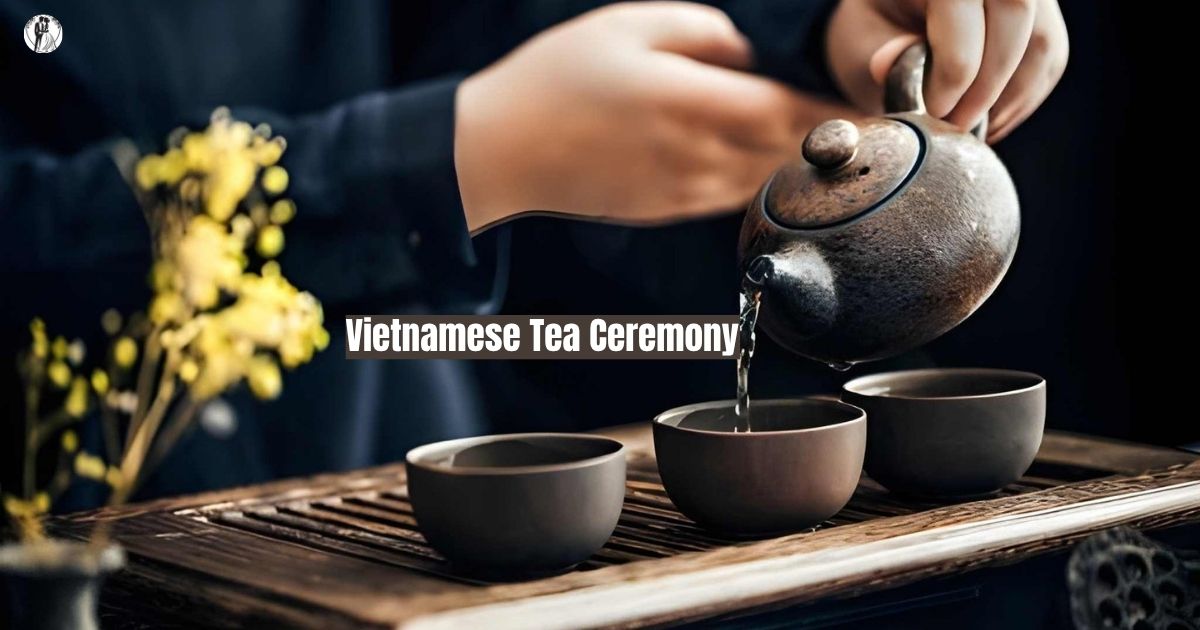
Step 5 The Tea Serving This is the heart of the vietnamese tea ceremony. The bride and groom receive the tea tray, pour tea into small cups, and serve them to elders starting from the oldest family member and working their way down.
As each elder receives their cup of tea, they:
- Drink the tea
- Offer a blessing or piece of advice
- Give a gift (jewelry or red envelope)
Step 6 Ring Exchange The couple exchanges engagement rings in front of both families, formally sealing their commitment.
Step 7 Closing and Celebration The ceremony concludes with the lighting of the dragon and phoenix candle, symbolizing the fusion of two families. Everyone then moves to the dining area for a shared meal and celebration.
7. The Vietnamese Tea Ceremony Script: What to Say
A good vietnamese tea ceremony script keeps everything organized and makes the ceremony feel special. Most families hire an MC (Master of Ceremonies) to guide the event. Here is a simplified version you can use or customize:
Sample Script Outline:
“Good morning, everyone. We are gathered here today to celebrate the engagement of [Groom’s Name] and [Bride’s Name]. On behalf of the groom’s family, we would like to formally request the blessing of the bride’s family…”
Key Script Moments:
- Welcome and introductions both families introduced by their representatives
- Purpose of the ceremony the MC explains the meaning of each gift tray
- Uncovering the trays MC guides the groom’s mother to unveil the gifts
- Bride’s entrance “Please welcome the bride in her traditional Ao Dai.”
- Ancestor worship incense lighting cue and moment of silence
- Tea ceremony cue “The couple will now offer tea to honor their families…”
- Gift giving elders are called in order to receive tea and give gifts
- Ring exchange formal announcement of the engagement
- Closing blessing final words wishing the couple a happy life ahead
Tip: Have the script printed out with time cues (e.g., 9:00 AM – Procession, 9:15 AM – Gift presentation). This keeps everything on schedule and stress-free.
8. Vietnamese Tea Ceremony Rental: What You Can Rent
If you do not own the traditional items needed for the ceremony, vietnamese tea ceremony rental services are available in many cities with large Vietnamese communities. Here is what you can typically rent:
| Item | Why You Might Rent It |
| Mâm quả (gift trays) | Traditional lacquer trays are expensive to buy |
| Tea sets | Antique or ornate ceramic sets for the ceremony |
| Ao Dai outfits | Designer ao dai for bride, groom, and family members |
| Floral decorations | Red floral archways and altar arrangements |
| Canopy/backdrop | Ceremonial backdrop for photos |
| Full ceremony packages | All-inclusive rentals including MC services |
Where to find rental services:
- Vietnamese bridal shops in cities like Houston, San Jose, Garden Grove (CA), and Sydney
- Online marketplaces like Etsy or Facebook Marketplace for specific items
- Vietnamese wedding planners who offer full ceremonial packages
Tip: Book rental items at least 2 to 3 months in advance especially for popular wedding seasons in spring and fall.
9. How to Incorporate the Vietnamese Tea Ceremony into a Modern Wedding
More couples in 2026 are blending the vietnamese tea ceremony tradition with Western wedding styles. Here is how to do it beautifully:
Option 1 Traditional First, Western Reception Hold the tea ceremony in the morning at the bride’s family home. Then have a Western-style ceremony and reception in the evening at a venue.
Option 2 Tea Ceremony at the Wedding Venue Many couples now include the tea ceremony as a dedicated segment during the wedding reception usually after the dinner toasts.
Option 3 Multicultural Fusion If one partner is non-Vietnamese, the ceremony can be adapted to include both cultures. Some couples incorporate Korean hanboks, Chinese qipaos, or Western suits alongside the ao dai.
Tips for a Modern Tea Ceremony:
- Use a bilingual script (Vietnamese + English) so all guests understand
- Display a printed program explaining each step
- Set up a beautiful tea ceremony altar as a photo backdrop
- Play soft traditional Vietnamese music during the tea serving
- Use modern florals (pampas grass, dried flowers) alongside traditional red decor
Conclusion
The vietnamese tea ceremony is far more than a ritual it is a celebration of love, respect, and family. Whether you are planning a traditional ceremony in Vietnam or a multicultural wedding halfway around the world, this beautiful tradition has the power to move everyone in the room.
From the glittering vietnamese tea ceremony tray carried through the door to the quiet moment when a grandchild kneels and offers tea with both hands it is a ceremony that reminds us what truly matters in life: family, gratitude, and love passed down through generations.
As you plan your own ceremony in 2026, use this guide to honor the tradition with confidence. And remember the most important ingredient in any tea ceremony is not the tea itself. It is the sincerity behind every cup you pour.
Did you find this guide helpful? Share it with someone planning a Vietnamese wedding and help keep this beautiful tradition alive.
Frequently Asked Questions
Q: What type of tea is used in the vietnamese tea ceremony?
Green tea or chrysanthemum tea is most commonly used both symbolize purity, respect, and clarity.
Q: Who serves the tea during the ceremony?
The bride and groom serve tea together, starting from the eldest family members on both sides.
Q: How long does the vietnamese tea ceremony last?
The ceremony itself typically lasts 30 to 60 minutes, though the full event with the procession and meal can take 2 to 4 hours.
Q: Can non-Vietnamese people participate in the ceremony?
Absolutely. Many multicultural couples include the tea ceremony as a way to honor Vietnamese heritage, and guests of all backgrounds are warmly welcomed.
Q: What should guests wear to a vietnamese tea ceremony wedding?
Guests typically wear traditional áo dài or smart, respectful attire. Avoid wearing white (associated with mourning in Vietnamese culture).
Q: Is the tea ceremony the same as the actual wedding?
No. The tea ceremony (Lễ Ăn Hỏi) is the engagement ceremony, held weeks or months before the actual wedding day (Lễ Cưới).
Q: How much do vietnamese tea ceremony gifts typically cost?
Gift budgets vary widely. Close family members often give gold jewelry worth several hundred dollars. Cash in red envelopes can range from $50 to several hundred dollars depending on the relationship.
Q: Can I rent everything I need for the ceremony?
Yes most traditional items including trays, tea sets, ao dai, and decorations are available through Vietnamese bridal shops and ceremony rental services.
